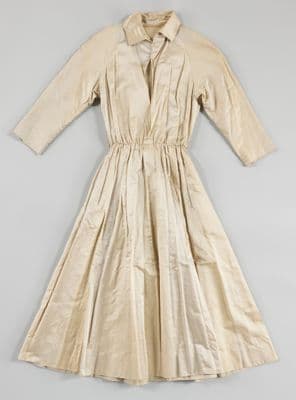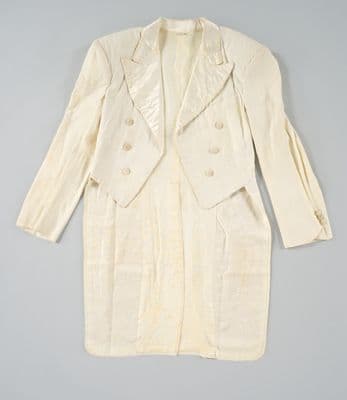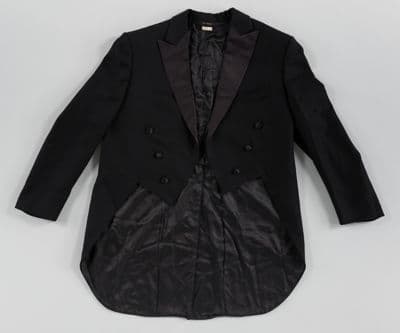
These two tailcoats reveal how formal menswear's most rigid silhouette barely budged across three decades of dramatic social change. The cream silk satin coat from the 1950s carries the same exacting proportions as its Victorian predecessor — that knife-sharp waist suppression, the identical swallow-tail drape, the precise double-breasted button stance — but swaps somber black wool for louche ivory silk that catches light like champagne.