1950s · 1950s · American
Production
ready-to-wear
Material
cotton
Culture
American
Movement
New Look · New Look / Post-War
Influences
Christian Dior New Look silhouette
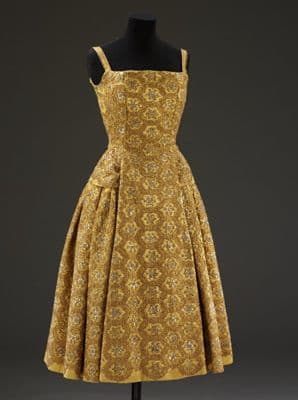
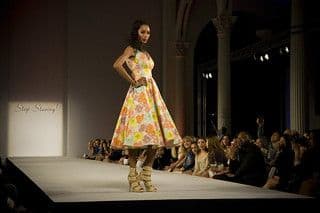
A strapless midi dress in bright golden yellow cotton featuring a fitted bodice that hugs the torso and transitions into a moderately flared A-line skirt that falls mid-calf. The dress appears to have internal boning or structure in the bodice to maintain its shape without straps. The neckline is straight across, creating a clean horizontal line at the bust. The skirt portion has enough volume to create a gentle bell shape when seated, characteristic of 1950s silhouettes that emphasized the waist while providing modest coverage. The fabric appears to be a medium-weight cotton with a smooth finish.


Both dresses drink from the same well of mid-century feminine architecture, but fifty years apart they reveal how the New Look's revolutionary silhouette became fashion's most enduring template. The cream tunic updates Dior's cinched-waist, full-skirted formula with casual sleeveless ease and a relaxed belt, while the golden yellow dress stays faithful to the original's strapless bodice and dramatic A-line sweep that made women look like flowers after years of wartime austerity.

Follow this garment wherever the graph leads
Both dresses ride the same wave of post-war optimism, when Dior's New Look made women hungry for yards of fabric after years of rationing — but they speak different languages of luxury. The American cotton version translates haute couture into something a secretary could afford, with its cheerful floral print and practical midi length, while the French silk number stays true to Dior's original vision with its sumptuous satin and dramatic full skirt that demands a ballroom, not a backyard.
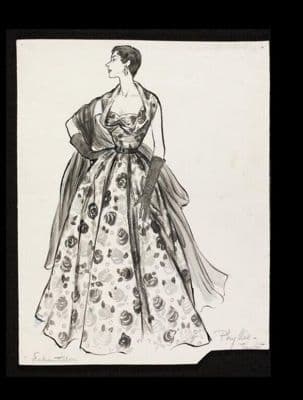
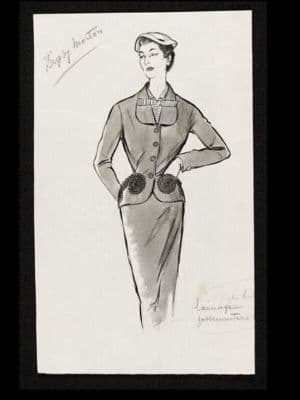
These two garments capture the split personality of 1950s femininity — one all sunshine and leisure, the other sharp-shouldered ambition. The yellow dress's strapless bodice and full skirt echo the same Dior-inspired proportions as the tailored suit's nipped waist and A-line silhouette, but where the sketch shows a woman armored for the boardroom in structured wool, the photograph presents someone ready for a garden party in cotton that catches the light.
Both dresses are pure New Look disciples, worshipping at the altar of Dior's 1947 revolution with their cinched waists and voluminous skirts that turn women into hourglasses. The yellow cotton number translates haute couture's drama into American practicality—that strapless bodice and midi hemline make it wearable for actual life, not just soirées.
Both dresses drink from the same well of mid-century feminine architecture, but fifty years apart they reveal how the New Look's revolutionary silhouette became fashion's most enduring template. The cream tunic updates Dior's cinched-waist, full-skirted formula with casual sleeveless ease and a relaxed belt, while the golden yellow dress stays faithful to the original's strapless bodice and dramatic A-line sweep that made women look like flowers after years of wartime austerity.

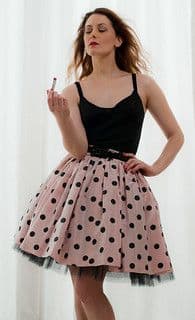
That poufy pink polka-dot skirt is pure Dior DNA, even seventy years after the New Look launched—the same engineered volume that made Christian Dior's 1947 Bar suit so revolutionary, just translated into millennial party wear. Where Dior used structured petticoats and yards of fabric to create his "flower woman" silhouette, this tulle confection achieves that same defiant femininity through sheer accumulation of dots and fluff.