V&A
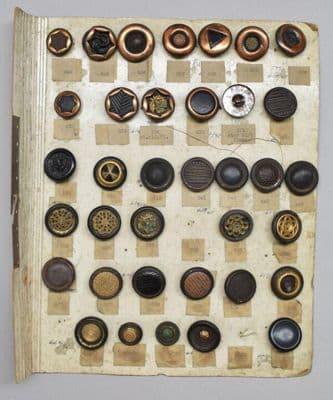
Plastic Button Sample Card with Black Brown Cream Buttons
1950s · 1940s · British
Designer
Froner Plastics Ltd.
Production
mass-produced
Material
plastic
Culture
British
Movement
New Look / Post-War
Influences
Art Deco geometric patterns
A commercial sample card displaying approximately 35 plastic buttons arranged in five rows on a cream-colored mounting board. The buttons showcase post-war British plastic manufacturing capabilities, featuring various sizes from small shirt buttons to large coat buttons. Colors range from deep black and chocolate brown to cream and golden tones. Surface treatments include smooth finishes, textured patterns, geometric designs, and some with metallic or pearlescent effects. Several buttons display Art Deco-influenced geometric motifs while others feature simple concentric circles or radiating patterns. The systematic arrangement demonstrates the variety of plastic button styles available to garment manufacturers during Britain's post-war industrial recovery period.
Connected To
60%
Influences·Art Deco geometric patterns
SHARED70 years · cross-culture · cross-category
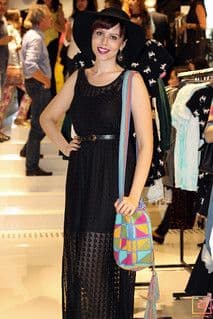
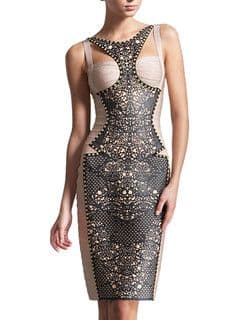
That black drop-waist dress with its geometric cutout pattern is speaking the same visual language as those meticulously arranged buttons from decades earlier—both channeling Art Deco's obsession with repeating geometric motifs and negative space. The dress's laser-cut or burnout technique creates the same rhythmic interplay of solid and void that you see in the buttons' concentric circles, radiating lines, and angular cutouts.
Text45%
Image39%
Entity28%
60%
Influences·Art Deco geometric patterns
SHARED70 years · cross-culture · cross-category
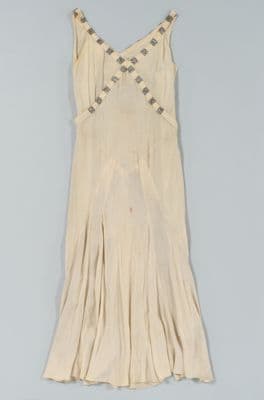
That beaded cocktail dress and this mid-century button card are both drunk on the same geometric intoxication — the dress's diamond lattice and the buttons' concentric circles, radiating spokes, and angular facets all spring from Art Deco's obsession with machine-age precision.
Text39%
59%
Influences·Art Deco geometric patterns
SHARED10 years · cross-culture · cross-category
The diamond-studded straps on this 1920s bias-cut gown and the geometric button samples from the 1950s both speak the same visual language—Art Deco's obsession with angular repetition and metallic gleam. Where the dress uses metal studs to create chevron patterns that emphasize the body's movement, the buttons translate those same diamond, hexagon, and radial motifs into miniature sculptural objects, each one a tiny monument to machine-age precision.
Influences·Art Deco geometric patterns
SHARED30 years · cross-category
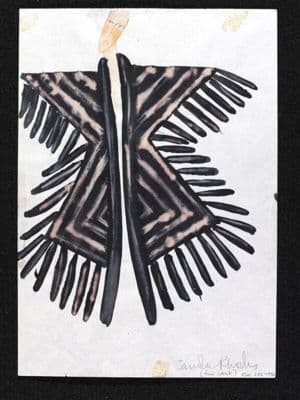
This button card and fur coat sketch reveal how Art Deco's geometric obsessions filtered through decades of British design, from the mundane to the magnificent. The buttons' concentric circles, radiating spokes, and bold contrast between dark and light materials echo perfectly in the coat's dramatic chevron stripes that seem to pulse outward from the central closure.
Text
Echoes Across Time
2000s → 1950s · 70yr60%
SHARED
That black drop-waist dress with its geometric cutout pattern is speaking the same visual language as those meticulously arranged buttons from decades earlier—both channeling Art Deco's obsession with repeating geometric motifs and negative space. The dress's laser-cut or burnout technique creates the same rhythmic interplay of solid and void that you see in the buttons' concentric circles, radiating lines, and angular cutouts.
Influences·Art Deco geometric patterns
2000s → 1950s
Pull the Thread→
Follow this garment wherever the graph leads