2000s · 2010s · Western
Production
ready-to-wear
Material
textured knit
Culture
Western
Movement
Art Deco · Indie Sleaze
Influences
Art Deco geometric patterns
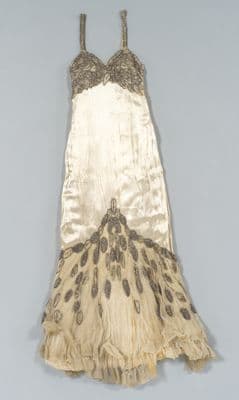
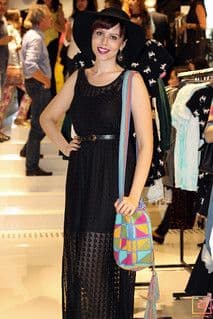
A sleeveless black dress with a characteristic 1920s drop-waist silhouette that falls straight from the hips to approximately mid-calf length. The garment features a textured knit fabric with an open geometric pattern creating visual interest through negative space. The neckline appears to be a simple scoop or boat neck, and the armholes are cut wide in the typical fashion of the era. The dress hangs loosely on the body without defining the natural waistline, instead creating the tubular silhouette that was revolutionary for the 1920s. The geometric openwork pattern in the knit reflects the Art Deco aesthetic popular during this period, combining modern industrial influences with decorative arts.
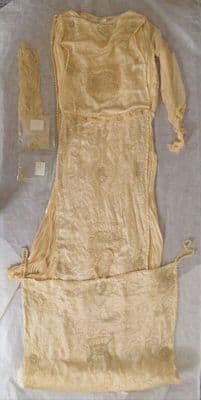
These two dresses speak the same geometric language across nine decades, both channeling Art Deco's obsession with angular patterns and linear repetition. The 1920s golden silk original shows hand-embroidered chevrons and diamond motifs cascading down its drop-waisted silhouette, while the contemporary black knit translates those same zigzag rhythms into textured fabric manipulation—proof that Deco's mathematical beauty never really left the runway.


These two dresses speak the same geometric language across nine decades, both channeling Art Deco's obsession with angular patterns and linear repetition. The 1920s golden silk original shows hand-embroidered chevrons and diamond motifs cascading down its drop-waisted silhouette, while the contemporary black knit translates those same zigzag rhythms into textured fabric manipulation—proof that Deco's mathematical beauty never really left the runway.

Follow this garment wherever the graph leads
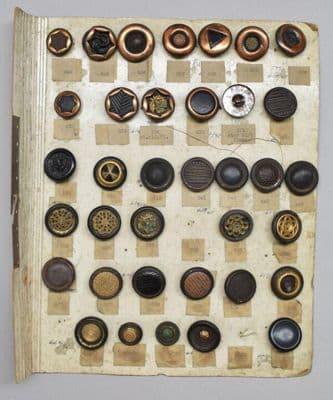
That black drop-waist dress with its geometric cutout pattern is speaking the same visual language as those meticulously arranged buttons from decades earlier—both channeling Art Deco's obsession with repeating geometric motifs and negative space. The dress's laser-cut or burnout technique creates the same rhythmic interplay of solid and void that you see in the buttons' concentric circles, radiating lines, and angular cutouts.
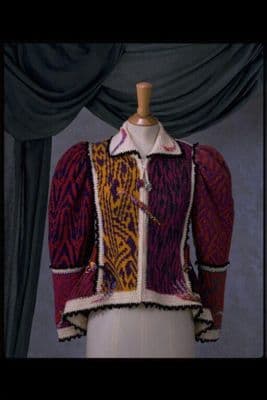
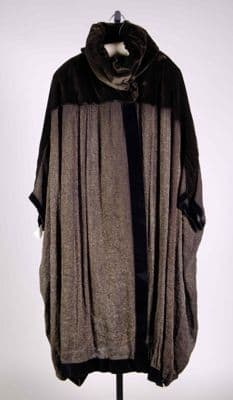
These two pieces share the seductive pull of texture as ornament, but where the 1980s jacket announces its geometric ambitions with bold chenille stripes that recall both Art Deco grandeur and Memphis Group rebellion, the black dress whispers its textural story through subtle knit variations that catch light like urban shadows.
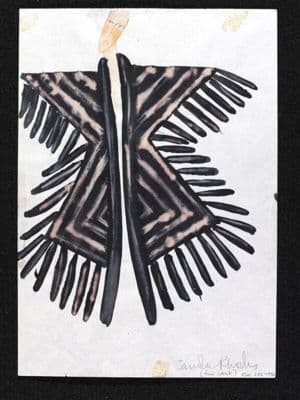
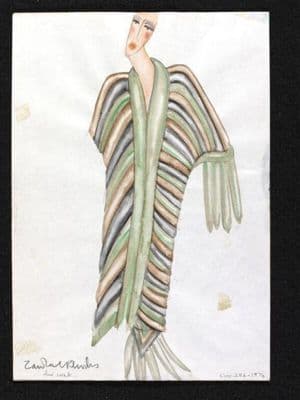
These pieces share the graphic punch of Art Deco geometry, but express it through completely different vocabularies of luxury. The 1970s fur coat explodes with radiating stripes that turn the body into kinetic sculpture—those bold black lines cutting through white fur like Tamara de Lempicka's sharpest angles.

That black drop-waist dress with its geometric cutout pattern is speaking the same visual language as those meticulously arranged buttons from decades earlier—both channeling Art Deco's obsession with repeating geometric motifs and negative space. The dress's laser-cut or burnout technique creates the same rhythmic interplay of solid and void that you see in the buttons' concentric circles, radiating lines, and angular cutouts.