V&A
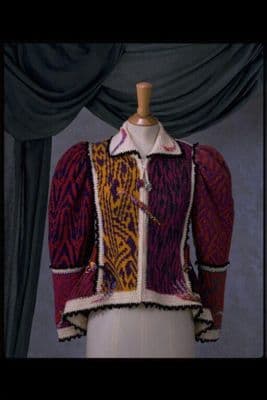
Multi-Colored Chenille Wool Cropped Geometric Jacket
1980s · 1980s · English
Designer
Annie Fewlass
Production
artisan-craft
Material
machine-knitted wool and cotton chenille
Culture
English
Movement
New Romanticism · Power Dressing
Influences
Art Deco geometric patterns · Victorian fitted jacket silhouette
A cropped jacket featuring intricate geometric patterning in rich burgundy, gold, and purple tones with cream accents. The garment displays complex intarsia knitting technique creating angular, almost Art Deco-inspired motifs across the body. The jacket has a fitted silhouette with structured shoulders typical of 1980s tailoring, three-quarter length sleeves, and appears to fasten at the front. The geometric patterns create vertical panels that emphasize the torso, while contrasting cream trim defines the edges. The machine-knitted construction allows for precise color work and sharp pattern definition, reflecting the era's embrace of both technological innovation and historical revival aesthetics.
jackettight fitcollarlessabove-the-hip
Connected To
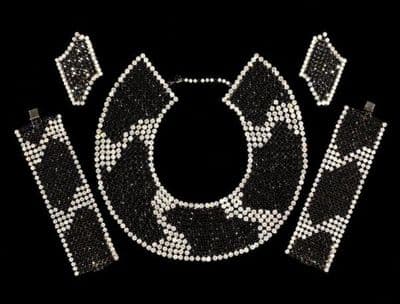
74%
Influences·Art Deco geometric patternsMovement·New RomanticismMovement·
Echoes Across Time
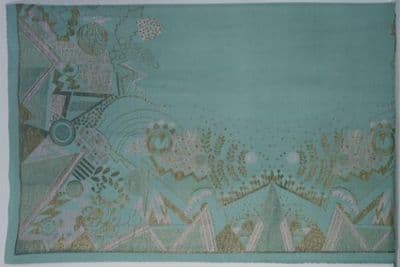
Roaring Twenties / Art Deco → 1980s · 60yr61%
SHARED
Both pieces pulse with the same geometric fever dream, but sixty years apart. The 1920s shawl whispers its Art Deco ancestry in delicate metallic threadwork that catches light like a jazz-age chandelier, while the 1980s jacket screams those same angular motifs in aggressive chenille stripes that look like they could power a nightclub.
Influences·Art Deco geometric patterns
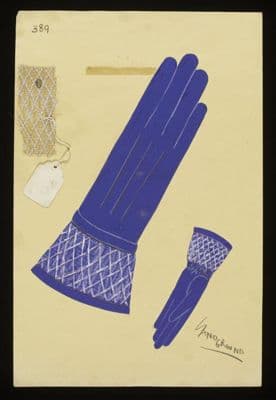
Great Depression → 1980s · 50yr61%
Pull the Thread→
Follow this garment wherever the graph leads