V&A
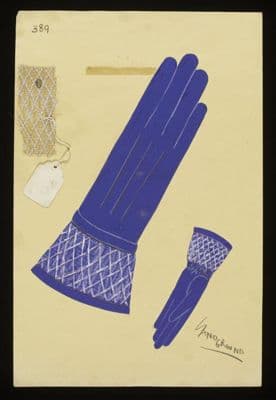
Royal Blue Long Leather Evening Gloves
Great Depression · 1930s · British
Designer
Ruby Estelle Sandground
Production
artisan-craft
Material
leather
Culture
British
Movement
Art Deco
Influences
Art Deco geometric patterns · 1930s evening glove proportions
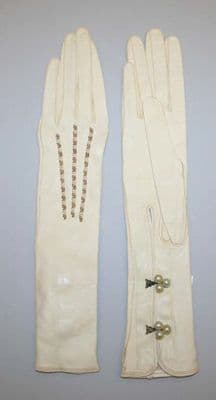
This design illustration shows a pair of long leather gloves extending well past the wrist to mid-forearm length. The gloves feature a rich royal blue color with white geometric diamond lattice embroidery or appliqué work concentrated at the cuff area. The fingers are rendered as individual fitted tubes typical of formal glove construction. A small cylindrical object, likely a lipstick or compact, is shown alongside, suggesting these are luxury accessories for evening wear. The geometric patterning reflects Art Deco influences popular in 1930s fashion design, while the extended length indicates formal occasion wear typical of the era's evening dress codes.
glovewrist-length
Connected To
Influences·Art Deco geometric patternsMovement·Art Deco
SHARED10 years · cross-culture
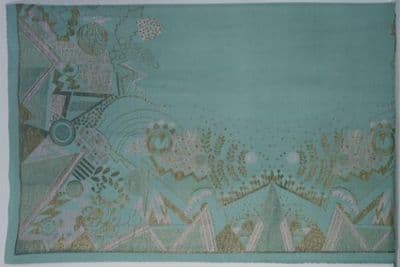
These two pieces reveal how Art Deco's geometric vocabulary traveled from the salon to the street, transforming luxury accessories across a turbulent decade. The French shawl's delicate metallic zigzags and crystalline motifs speak the same visual language as the British glove's bold diamond lattice, but where the 1920s piece whispers its modernity through gossamer silk and precious metal threads, the Depression-era glove shouts it in that defiant cobalt blue leather.
Echoes Across Time
Great Depression → 1980s · 50yr61%
SHARED
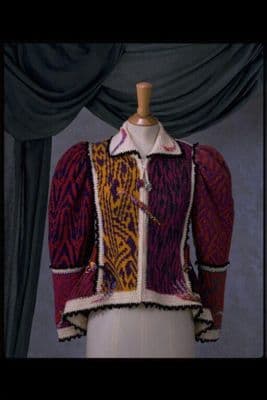
These two pieces reveal how Art Deco's geometric language became fashion's most enduring visual grammar. The 1930s glove's diamond lattice cuff—rendered in precise white stitching against royal blue leather—speaks the same mathematical poetry as the 1980s jacket's intarsia chevrons and zigzags, though translated from aristocratic evening wear into downtown knitwear rebellion.
Influences·Art Deco geometric patterns
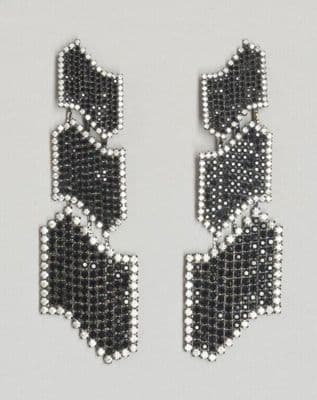
Great Depression → 1980s · 50yr61%
Pull the Thread→
Follow this garment wherever the graph leads