SMITHSONIAN
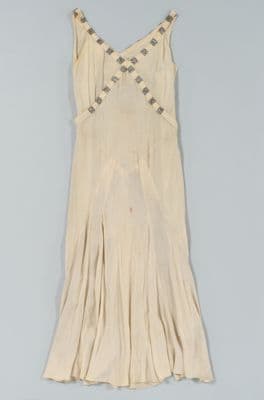
Ivory Synthetic Crepe Bias-Cut Evening Gown
Roaring Twenties / Art Deco · 1930s · American
Production
ready-to-wear
Material
synthetic crepe
Culture
American
Movement
Art Deco
Influences
Art Deco geometric patterns · bias-cut technique
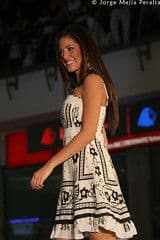
This ivory evening gown exemplifies 1930s bias-cut construction with its figure-skimming silhouette that flares into a graceful trumpet hem. The synthetic crepe fabric drapes smoothly over the body, creating the characteristic liquid flow of Depression-era evening wear. Geometric rhinestone or metallic studs form diamond patterns across the bodice and continue down the front in Art Deco-inspired arrangements. The sleeveless design features thin shoulder straps and a V-neckline. The skirt extends to floor length with subtle flaring that allows for movement while maintaining the streamlined aesthetic that defined 1930s glamour during economically challenging times.
dressfit and flarev-neckfloor length
Connected To
Movement·Art DecoWorn with·evening shoesWorn with·undergarments
Echoes Across Time
Roaring Twenties / Art Deco → 2020s · 90yr65%
SHARED
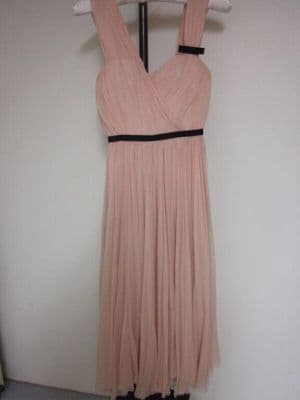
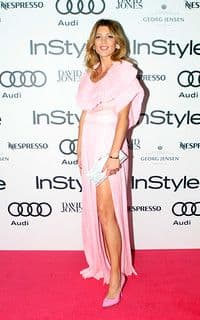
The ivory twenties gown and the blush pink contemporary dress share DNA in their devotion to the bias cut's liquid drape, but where the vintage piece announces its modernity through geometric beadwork that catches light like a jazz-age chandelier, the 2020s version whispers its sophistication through a single shoulder and strategic slit.
Worn with·evening shoesWorn with·undergarmentsTechnique·draping
Pull the Thread→
Follow this garment wherever the graph leads