V&A
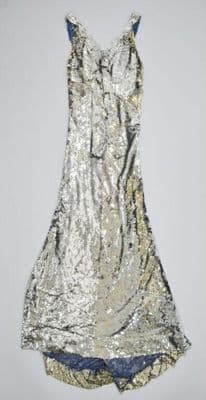
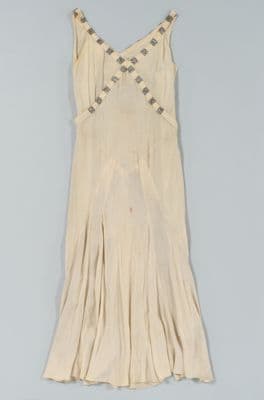
Silver Sequined Tulle Sleeveless Evening Gown
Great Depression · 1930s · English
Production
ready-to-wear
Material
silk tulle with silver sequins
Culture
English
Movement
Art Deco
Influences
bias-cut draping technique · Art Deco metallic embellishment
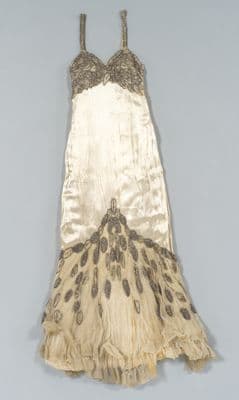
This sleeveless evening gown exemplifies 1930s bias-cut construction with a fitted bodice that flows into a floor-length skirt. The entire garment is covered in silver sequins applied to silk tulle, creating a shimmering surface that catches light. The neckline appears to be a simple scoop or V-shape, with thin shoulder straps. The silhouette follows the natural body line through the torso before flaring gently at the hips, characteristic of mid-1930s evening wear. Navy blue fabric is visible at the hemline, likely serving as a foundation or contrast lining. The sequin application appears dense and uniform, suggesting machine application rather than hand-sewn embellishment.
dresstrumpetv-neckfloor length
Connected To
Movement·Art DecoWorn with·evening shoesWorn with·undergarments
Echoes Across Time
2010s → Great Depression · 90yr62%
SHARED
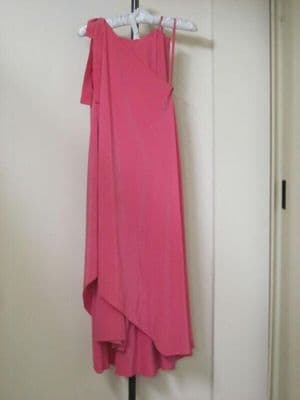
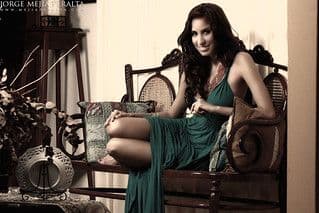
Both dresses understand that sometimes the most seductive thing you can do is let fabric do the talking. The Depression-era gown uses silver sequins scattered like fallen stars across pale tulle, creating that distinctly 1930s tension between opulence and restraint, while the contemporary emerald slip dress achieves the same languid sophistication through pure silk bias cut that skims rather than clings.
Movement·Art DecoTechnique·drapingFunction·formal-evening
Pull the Thread→
Follow this garment wherever the graph leads