V&A
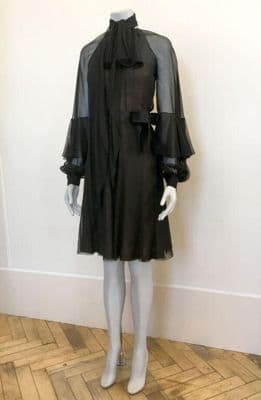
Black Silk Chiffon High-Neck Dress with Bow
1970s · 1970s · French
Designer
Christian Dior
Production
haute couture
Material
silk chiffon
Culture
French
Movement
Hippie / Counterculture
Influences
1930s bias-cut evening wear · Victorian high neckline
A knee-length dress in black silk chiffon featuring a high mock turtleneck with a dramatic bow tie at the throat. The sleeves are full and gathered, creating volume from shoulder to wrist where they are finished with fitted cuffs. The bodice flows into an A-line silhouette that falls to just below the knee. A contrasting satin belt in charcoal gray cinches the waist, creating definition in the otherwise fluid silhouette. The lightweight chiffon fabric appears to have a subtle transparency, typical of Christian Dior's sophisticated approach to evening wear during the early 1970s when the house balanced romantic femininity with the era's emerging bohemian influences.
dressa-linehigh neckknee length
Connected To
Influences·1930s bias-cut evening wearWorn with·undergarmentsTechnique·draping
Echoes Across Time

2000s → 1970s · 40yr71%
SHARED
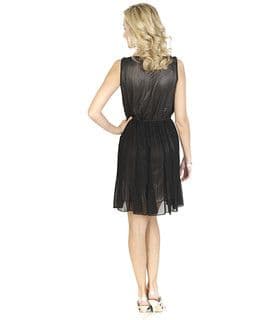
These two dresses speak the same fluid language of silk chiffon, but with forty years of social evolution between them. The 1970s black dress channels Saint Laurent's reverent borrowing from 1930s evening wear—that high neck with its pussy-bow tie and bishop sleeves are pure Parisian propriety, where sensuality hides behind coverage.
Influences·1930s bias-cut evening wearWorn with·undergarmentsTechnique·draping
Pull the Thread→
Follow this garment wherever the graph leads