FASHIONPEDIA
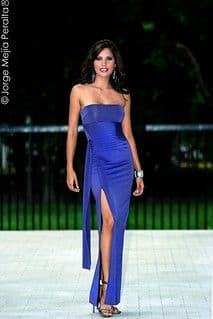
Royal Blue Stretch Satin Strapless Mermaid Gown
1990s · 1990s · Western
Production
ready-to-wear
Material
stretch satin
Culture
Western
Movement
Supermodel Era
Influences
1930s bias-cut evening wear · 1950s Hollywood glamour
A strapless evening gown in royal blue stretch satin featuring a body-conscious silhouette that follows the natural curves of the torso and hips. The dress has a straight-across neckline with internal boning or structure for support. A dramatic thigh-high slit extends up the left side, creating movement and revealing the leg. The gown appears to be floor-length with a slight train. The stretch satin fabric has a lustrous finish that catches light, creating subtle highlights across the fitted bodice and skirt. The construction emphasizes the hourglass silhouette typical of 1990s glamour, with clean lines and minimal embellishment allowing the fabric and cut to create the visual impact.
dressmermaidstraight acrossmaxi
Connected To

Influences·1930s bias-cut evening wearMovement·Supermodel EraTechnique·
Echoes Across Time
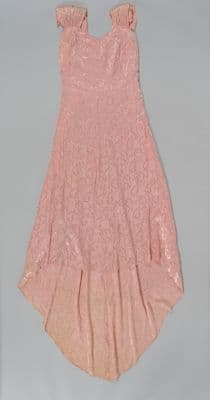
1950s → 1990s · 50yr61%
SHARED
Both dresses descend from the 1930s bias-cut revolution, but they've traveled very different paths to get there. The pink damask gown maintains that era's fluid drape and handkerchief hemline—a direct lineage from Madeleine Vionnet's geometric cuts that let fabric fall in natural points. The blue satin number takes the bias principle but muscles it up with body-con stretch and a thigh-high slit, turning 1930s liquid elegance into 1990s power seduction.
Influences·1930s bias-cut evening wear
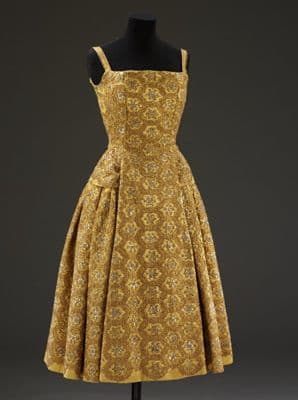
1990s → 1950s
Pull the Thread→
Follow this garment wherever the graph leads