1950s · 1940s · American
Production
ready-to-wear
Material
synthetic damask with metallic thread
Culture
American
Movement
New Look / Post-War
Influences
1930s bias-cut evening wear · handkerchief hemlines
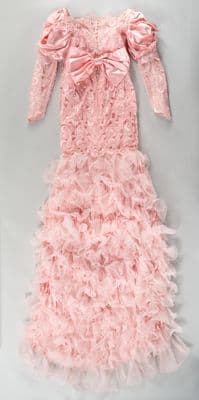
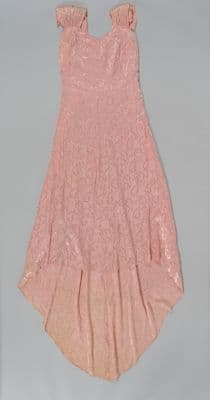
This evening gown features a fitted bodice with thin shoulder straps and a sweetheart neckline that creates a structured upper silhouette. The synthetic damask fabric displays a subtle woven pattern with metallic thread that catches light across the surface. The skirt flows from a fitted waist into an asymmetrical handkerchief hemline with pointed panels that create dramatic movement. The construction shows wartime economy in its streamlined design - minimal fabric waste while maintaining elegance. The dusty pink color and synthetic material reflect 1940s innovations in textile production during material rationing periods.
These two gowns speak the same sultry language of 1930s bias-cut glamour, just translated through different decades' vocabularies. The pink damask number's handkerchief hemline and body-skimming silhouette echo the same sinuous, figure-revealing principles as the ivory halter's trumpet flare and high neckline that plunges into nothingness at the back.


These two gowns speak the same sultry language of 1930s bias-cut glamour, just translated through different decades' vocabularies. The pink damask number's handkerchief hemline and body-skimming silhouette echo the same sinuous, figure-revealing principles as the ivory halter's trumpet flare and high neckline that plunges into nothingness at the back.


Follow this garment wherever the graph leads
These two gowns share the liquid poetry of 1930s bias cutting, but separated by four decades, they tell different stories about feminine power. The pink damask number with its dramatic handkerchief hem pools and puddles like molten metal, all shimmering surface and architectural drama—very much the 1950s idea of glamour as spectacle.
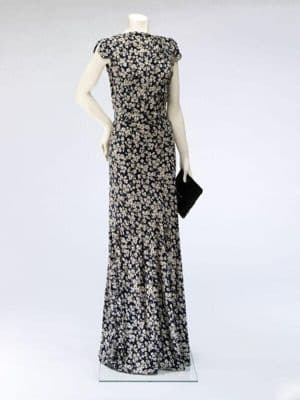
These two gowns speak the same language of Depression-era pragmatism dressed up in evening clothes, though they're separated by a decade and an ocean. The earlier French silk crêpe moves with liquid restraint—its scattered floral print and sleek silhouette offering understated elegance when extravagance felt vulgar.
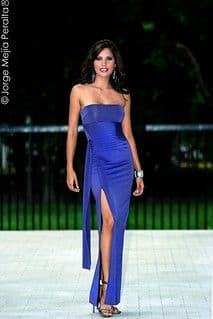
Both dresses descend from the 1930s bias-cut revolution, but they've traveled very different paths to get there. The pink damask gown maintains that era's fluid drape and handkerchief hemline—a direct lineage from Madeleine Vionnet's geometric cuts that let fabric fall in natural points. The blue satin number takes the bias principle but muscles it up with body-con stretch and a thigh-high slit, turning 1930s liquid elegance into 1990s power seduction.
These two gowns share the liquid poetry of 1930s bias cutting, but separated by four decades, they tell different stories about feminine power. The pink damask number with its dramatic handkerchief hem pools and puddles like molten metal, all shimmering surface and architectural drama—very much the 1950s idea of glamour as spectacle.