V&A
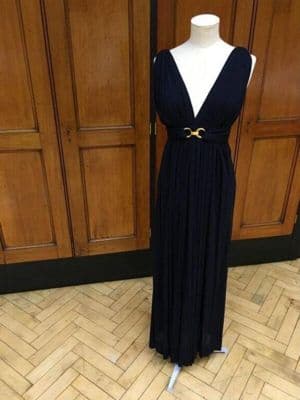
Navy Blue Jersey Plunging V-Neck Evening Gown
1970s · 1970s · French
Designer
Yves Saint Laurent Rive Gauche
Production
ready-to-wear
Material
rayon jersey
Culture
French
Movement
Disco
Influences
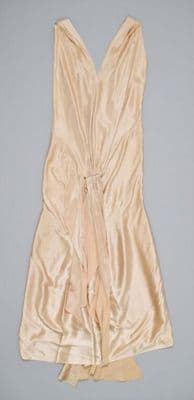
1930s bias-cut evening wear · Greek chiton draping
A floor-length evening gown in navy blue rayon jersey featuring a dramatic plunging V-neckline that extends nearly to the natural waist. The sleeveless bodice is secured with a thin belt or tie at the empire waistline, creating gathered definition below the bust. The fluid jersey fabric drapes closely to the body through the torso and hips before falling in a straight column to the floor. The construction relies on the natural stretch and drape of the knit fabric rather than structured tailoring. This represents Yves Saint Laurent's mastery of minimalist luxury during the mid-1970s, when he pioneered the use of casual fabrics like jersey for formal evening wear, creating effortless glamour through precise cut and superior materials.
dresscolumnv-neckfloor length
Connected To
Influences·1930s bias-cut evening wearInfluences·Greek chiton drapingWorn with·undergarments
Echoes Across Time

2020s → 1970s · 50yr80%
SHARED
These dresses are separated by fifty years but united by their devotion to the body's natural architecture—both use fluid draping to create that liquid-mercury effect perfected in 1930s bias cuts. The pink gown's asymmetrical shoulder treatment and the navy's plunging neckline are different routes to the same destination: maximum skin, minimum interruption, letting fabric pool and flow like water over curves.
Influences·1930s bias-cut evening wearInfluences·Greek chiton drapingWorn with·undergarments
Pull the Thread→
Follow this garment wherever the graph leads