2000s · 2010s · Western
Production
ready-to-wear
Material
silk chiffon
Culture
Western
Movement
Indie Sleaze
Influences
Ancient Greek chiton draping · 1930s bias-cut evening wear
A contemporary one-shoulder evening gown featuring an asymmetrical neckline that drapes across the torso in a Grecian-inspired manner. The bodice appears fitted through the waist with subtle ruching or gathering at the shoulder point. The skirt flows in soft, fluid lines from a fitted waistline, creating gentle movement in the lightweight silk chiffon fabric. The champagne-toned fabric has a subtle luminous quality typical of silk chiffon, with the draping creating natural shadow and highlight variations across the surface. The construction emphasizes clean, minimal lines with sophisticated draping techniques rather than structural embellishment.


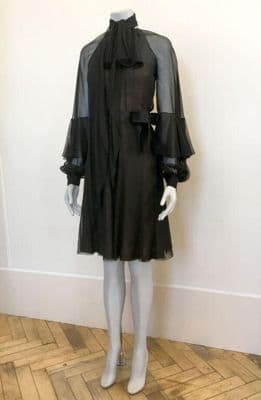
These two dresses speak the same fluid language of silk chiffon, but with forty years of social evolution between them. The 1970s black dress channels Saint Laurent's reverent borrowing from 1930s evening wear—that high neck with its pussy-bow tie and bishop sleeves are pure Parisian propriety, where sensuality hides behind coverage.
Follow this garment wherever the graph leads
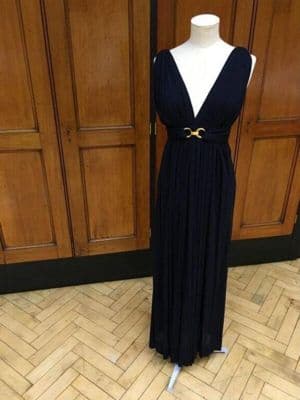
These two dresses speak the same fluid language of silk chiffon, but with forty years of social evolution between them. The 1970s black dress channels Saint Laurent's reverent borrowing from 1930s evening wear—that high neck with its pussy-bow tie and bishop sleeves are pure Parisian propriety, where sensuality hides behind coverage.
These two gowns are separated by forty years but united by their devotion to the body-skimming drape that Madeleine Vionnet perfected in the 1930s—the champagne silk chiffon flows in those telltale bias-cut ripples, while the navy jersey clings and releases in the same liquid rhythm. The one-shoulder versus plunging neckline might suggest different eras of propriety, but both rely on that essential modernist trick of making fabric do the work of seduction rather than structure.
Both dresses understand that evening glamour lives in the float and fall of silk, but they achieve it through opposite strategies. The champagne one-shoulder dress from the 2000s uses architectural draping to create its drama — that gathered shoulder treatment and the way the chiffon pools and wraps around the body like liquid sculpture.
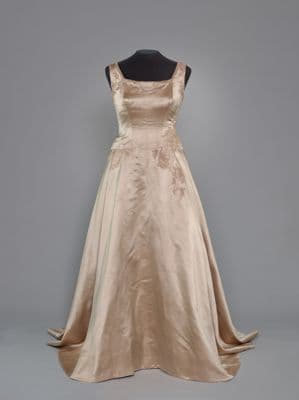
These two champagne gowns speak the same language of liquid elegance, separated by eight decades but united in their understanding that silk's natural drape can sculpt the body better than any structured seaming. The 1920s gown achieves its fluid line through bias-cut satin that pools into a train, while the modern dress uses the lighter hand of chiffon to create that Grecian one-shoulder moment that became the red-carpet uniform of the 2000s.


These two gowns are separated by forty years but united by their devotion to the body-skimming drape that Madeleine Vionnet perfected in the 1930s—the champagne silk chiffon flows in those telltale bias-cut ripples, while the navy jersey clings and releases in the same liquid rhythm. The one-shoulder versus plunging neckline might suggest different eras of propriety, but both rely on that essential modernist trick of making fabric do the work of seduction rather than structure.