V&A
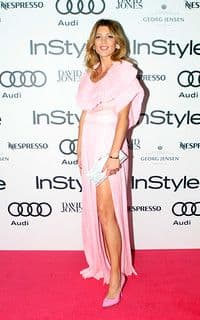
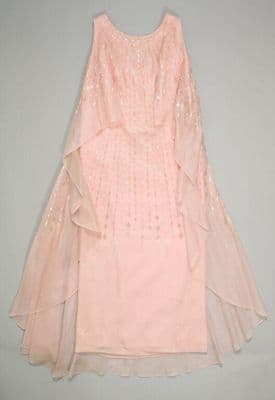
Pink Silk Georgette Beaded Evening Gown
1970s · 1960s · British
Production
ready-to-wear
Material
silk georgette
Culture
British
Movement
Mod · Hippie / Counterculture
Influences
Grecian draping · Art Nouveau flowing lines
A pale pink silk georgette evening gown featuring a sleeveless bodice with a scoop neckline and flowing, asymmetrical overlay panels that create movement and visual interest. The dress appears to have beaded embellishment scattered across the surface, creating subtle texture and sparkle. The silhouette is characteristic of late 1960s formal wear, with a straight, unstructured bodice that falls into a column-like shape, departing from the fitted waists of earlier decades. The georgette fabric's lightweight, semi-sheer quality allows the overlay panels to drape gracefully, creating layers that move independently. This construction reflects the period's embrace of fluid, unstructured garments that prioritized comfort and natural movement over rigid tailoring.
dressa-linescoop neckfloor length
Connected To
Movement·Hippie / CountercultureMovement·ModWorn with·undergarments
Echoes Across Time

2000s → 1970s · 50yr62%
SHARED
Both dresses understand that evening glamour lives in the float and fall of silk, but they achieve it through opposite strategies. The champagne one-shoulder dress from the 2000s uses architectural draping to create its drama — that gathered shoulder treatment and the way the chiffon pools and wraps around the body like liquid sculpture.
Worn with·evening accessoriesWorn with·undergarmentsTechnique·draping
Pull the Thread→
Follow this garment wherever the graph leads