SMITHSONIAN
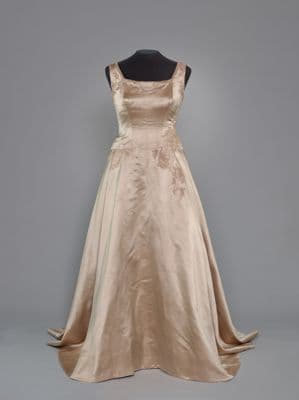
Champagne Silk Satin A-Line Evening Gown
Roaring Twenties / Art Deco · 1930s · American
Production
handmade
Material
silk satin
Culture
American
Influences
1930s Hollywood glamour · classical Greek draping
This formal evening gown features a fitted bodice with wide shoulder straps and a square neckline that creates a classical silhouette. The lustrous silk satin fabric drapes smoothly from the fitted waist into a full-length A-line skirt with a subtle train. The champagne-colored satin has a rich, reflective surface that catches light beautifully. The construction shows precise tailoring in the bodice with clean seaming, while the skirt flows gracefully to the floor. This style represents the refined elegance of 1930s formal wear, moving away from the shorter hemlines of the 1920s toward a more sophisticated, floor-length silhouette that emphasized feminine curves and classical proportions.
dressa-linesquare necklinefloor length
Connected To
Influences·1930s Hollywood glamour
SHARED80 years · cross-culture · cross-category
The champagne gown's liquid satin and architectural bias cut echo the same 1930s Hollywood sophistication that the modern tuxedo channels through its razor-sharp lapels and body-skimming silhouette. Both garments weaponize restraint—the gown through its unadorned sweep of lustrous fabric, the tuxedo through its monastic black precision—proving that true glamour lies in perfection of line rather than excess of ornament.
Echoes Across Time

Roaring Twenties / Art Deco → 2020s · 80yr63%
SHARED
That champagne gown's liquid satin and precise architectural lines channel the same 1930s Hollywood glamour that's been reborn in that razor-sharp tuxedo blazer—both garments understand that true sophistication lies in immaculate tailoring rather than ornament. The gown's sleek bodice and the blazer's knife-edge lapels are separated by nearly a century, but they're speaking the same language of power dressing, where the cut does all the talking.
Influences·1930s Hollywood glamour

Roaring Twenties / Art Deco → 2020s
Pull the Thread→
Follow this garment wherever the graph leads