2020s · 2010s · Western
Production
ready-to-wear
Material
wool blend
Culture
Western
Movement
Quiet Luxury
Influences
Victorian white tie tradition · 1930s Hollywood glamour
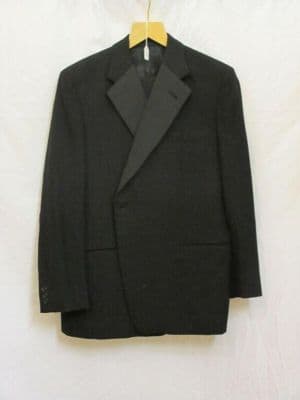
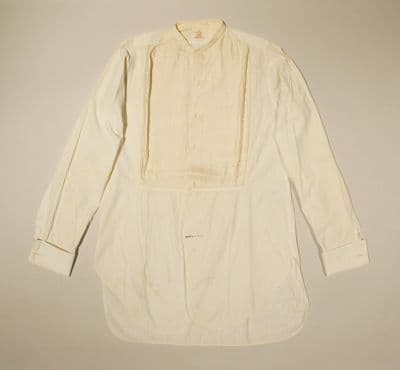
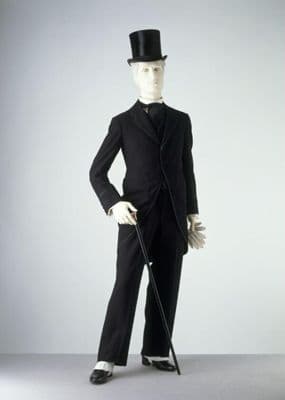
A contemporary black tuxedo featuring a slim-cut dinner jacket with peak lapels faced in satin. The jacket displays a close-fitting silhouette through the torso with a single-button closure, creating clean lines characteristic of modern formal menswear. The wool blend fabric appears to have a matte finish contrasting with the glossy satin lapel facings. Paired with matching black trousers with satin side stripes and a crisp white dress shirt with wing collar and white bow tie. The overall construction emphasizes precision tailoring with minimal ornamentation, reflecting contemporary luxury menswear's emphasis on perfect fit and refined details over ostentatious decoration.


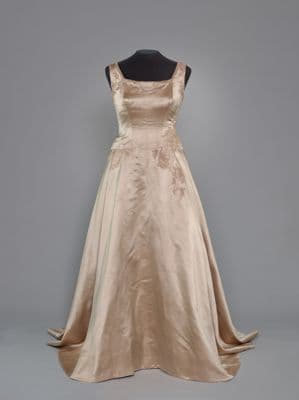
The champagne gown's liquid satin and architectural bias cut echo the same 1930s Hollywood sophistication that the modern tuxedo channels through its razor-sharp lapels and body-skimming silhouette. Both garments weaponize restraint—the gown through its unadorned sweep of lustrous fabric, the tuxedo through its monastic black precision—proving that true glamour lies in perfection of line rather than excess of ornament.


Follow this garment wherever the graph leads
The slim-fit tuxedo on the left and the broader-shouldered dinner jacket on the right trace the same formal DNA across three decades of shifting masculine ideals. Where the 1980s jacket asserts itself with padded shoulders and a generous cut that speaks to an era of corporate power dressing, today's version hugs the torso with almost feminine precision, its narrow lapels and tapered waist reflecting our current obsession with athletic bodies over boardroom bulk.
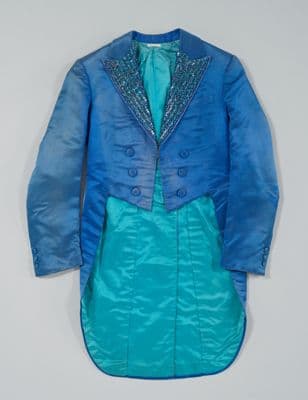
The 1990s theatrical tailcoat's electric blue silk and contrasting turquoise lining reveal formal wear's capacity for pure spectacle—this is evening dress as performance, where the dramatic cutaway silhouette and jewel-toned satins announce their wearer before he even speaks.
The champagne gown's liquid satin and architectural bias cut echo the same 1930s Hollywood sophistication that the modern tuxedo channels through its razor-sharp lapels and body-skimming silhouette. Both garments weaponize restraint—the gown through its unadorned sweep of lustrous fabric, the tuxedo through its monastic black precision—proving that true glamour lies in perfection of line rather than excess of ornament.
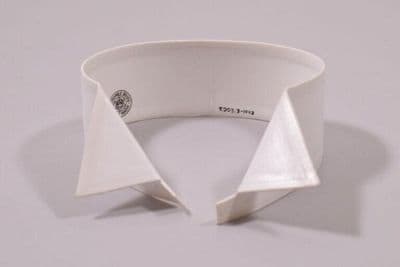
That wing collar's razor-sharp points and architectural stiffness reveal the DNA still pulsing through formal menswear a century later—the same geometric severity that gives this modern tuxedo its knife-edge lapels and body-skimming silhouette. Where the 1920s collar stood like a paper fortress around the neck, demanding perfect posture and social compliance, today's tuxedo achieves the same authoritative effect through its lean, unforgiving cut that tolerates no slouching.