1990s · 1980s · American
Production
one-of-a-kind
Material
silk satin
Culture
American
Movement
Grunge
Influences
19th century formal tailcoat · theatrical costume tradition
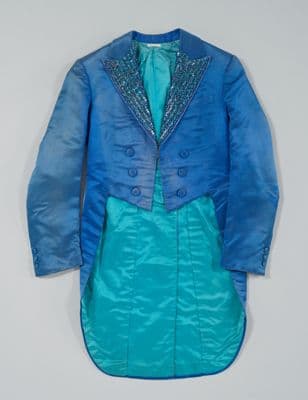
A theatrical tailcoat featuring a vibrant royal blue silk satin body with contrasting turquoise silk lining and tails. The garment displays classic formal tailcoat construction with peaked lapels heavily embellished with black beadwork or sequins in decorative patterns. The fitted waist transitions to long curved tails that would fall behind the wearer. Double-breasted front closure with multiple buttons maintains traditional formal structure while the saturated color palette and ornate lapel decoration clearly mark this as a stage costume rather than conventional formalwear. The construction combines traditional tailoring techniques with theatrical embellishment.


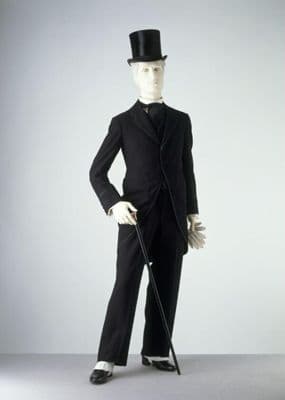
The theatrical tailcoat's razor-sharp lapels, crisp as origami in royal blue satin, echo the geometric aggression of that starched wing collar's jutting points—both pieces weaponizing formal menswear's architecture into something almost violent in its precision.


Follow this garment wherever the graph leads
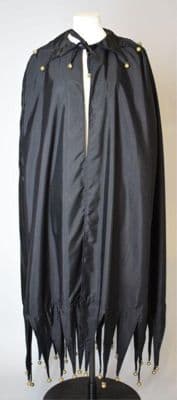
These two pieces speak the same theatrical language, but with different accents—the tailcoat channels music hall grandeur with its electric blue silk and elaborate beadwork cascading down the lapels, while the cape draws from medieval pageantry with its dramatic sweep and gold leather shoulder details.
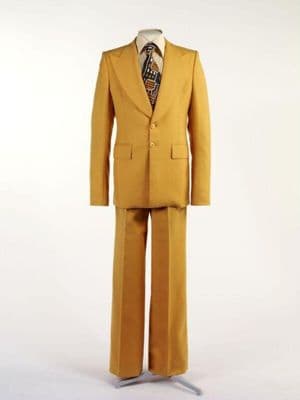
That electric blue tailcoat with its turquoise silk lining reads like pure theater costume—the kind of saturated color and formal structure that demands stage lights and an audience. The mustard yellow suit, meanwhile, carries the same theatrical DNA but filtered through 1970s menswear's brief flirtation with peacock revolution, when men's suiting borrowed costume's boldness for the street.
That electric blue tailcoat with its jeweled lapels and shocking turquoise lining is pure theatrical excess—the kind of thing that demands a spotlight and probably came with its own dramaturgy notes. Fast-forward thirty years to that sleek black tuxedo blazer, and you see how formal menswear learned to whisper instead of shout: the silhouette is razor-sharp where the tailcoat was operatic, the proportions body-conscious where the other was grandly architectural.
The 1990s theatrical tailcoat's electric blue silk and contrasting turquoise lining reveal formal wear's capacity for pure spectacle—this is evening dress as performance, where the dramatic cutaway silhouette and jewel-toned satins announce their wearer before he even speaks.