V&A
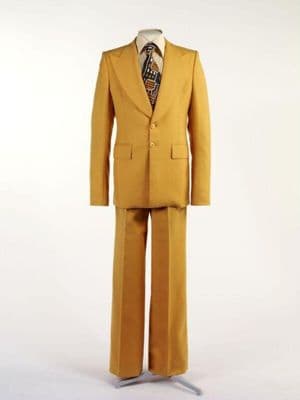
Golden Yellow Wool Two-Piece Men's Suit
1970s · 1970s · British
Designer
Victor Herbert
Production
ready-to-wear
Material
wool
Culture
British
Movement
Glam Rock · Disco
Influences
1940s zoot suit proportions · theatrical costume tradition
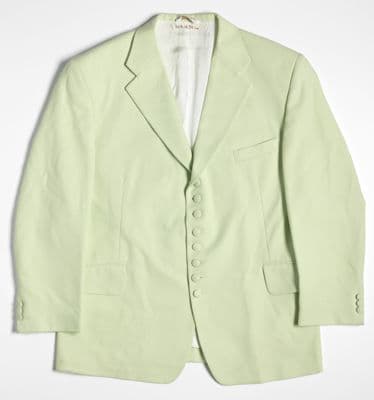
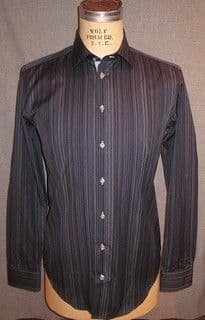
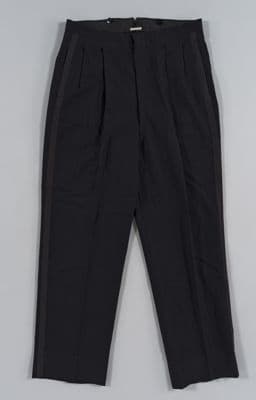
A striking golden yellow wool suit featuring the characteristic wide peaked lapels and fitted silhouette of 1970s menswear. The jacket displays a structured shoulder line with moderate padding, a nipped waist, and flap pockets positioned low on the hips. The trousers follow the era's preference for a straight, wide leg cut that falls to cover the shoes completely. The suit is styled with a cream dress shirt and brown patterned tie featuring geometric or paisley motifs typical of the period. The bold color choice and sharp tailoring exemplify the confident, theatrical aesthetic of Glam Rock fashion, where traditional menswear was reimagined with vibrant hues and dramatic proportions that challenged conventional masculine dress codes.
jacketregular fithip length
Connected To
68%
Influences·theatrical costume traditionWorn with·dress shirt
SHARED10 years · cross-culture
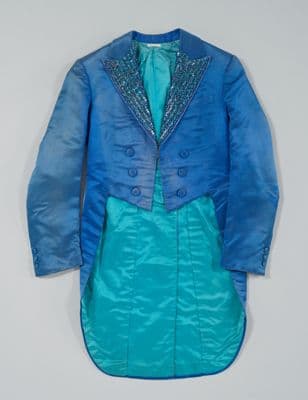
That electric blue tailcoat with its turquoise silk lining reads like pure theater costume—the kind of saturated color and formal structure that demands stage lights and an audience. The mustard yellow suit, meanwhile, carries the same theatrical DNA but filtered through 1970s menswear's brief flirtation with peacock revolution, when men's suiting borrowed costume's boldness for the street.
Pull the Thread→
Follow this garment wherever the graph leads