FASHIONPEDIA
Charcoal Gray Wool Norfolk Business Suit
2000s · 2010s · Western
Production
ready-to-wear
Material
wool suiting
Culture
Western
Movement
Indie Sleaze
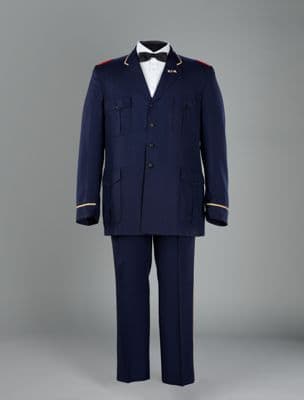
A contemporary formal business suit featuring a charcoal gray wool jacket with notched lapels and matching trousers. The jacket displays modern tailoring with a fitted silhouette through the torso and structured shoulders. Worn with a crisp white dress shirt and narrow black tie, creating the classic formal menswear combination. The suit demonstrates machine-constructed tailoring typical of ready-to-wear formal menswear, with clean lines and minimal visual texture. The overall presentation reflects standard contemporary business formal dress codes adapted for evening events.
jacketregular fithip length
Connected To
Worn with·dress shirtWorn with·necktie
SHARED40 years · cross-culture
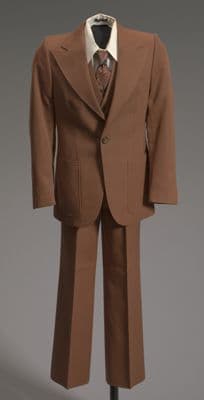
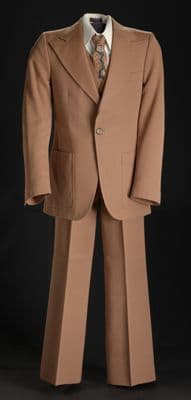
The camel suit's wide lapels and flared trousers scream 1970s leisure culture, while the charcoal suit's narrow lapels and slim cut whisper 2000s corporate restraint — yet both men are performing the same ritual of respectability through the white shirt and tie. What separates them isn't just four decades, but the shift from when suiting was about making a statement to when it became about not making the wrong one.
Text59%
Image42%
Entity26%
Worn with·dress shirtWorn with·necktie
SHARED40 years · cross-culture
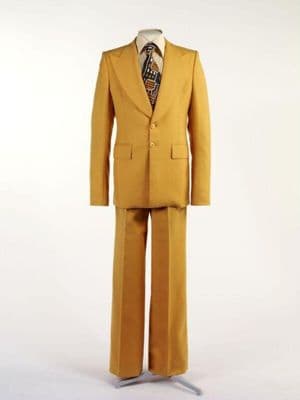
The charcoal suit's razor-sharp shoulders and lean silhouette speak the language of contemporary power dressing, while that golden yellow suit channels the bold, wide-lapeled swagger of 1970s tailoring when men weren't afraid of color.
Worn with·dress shirtWorn with·necktie
SHARED110 years · cross-culture · cross-category
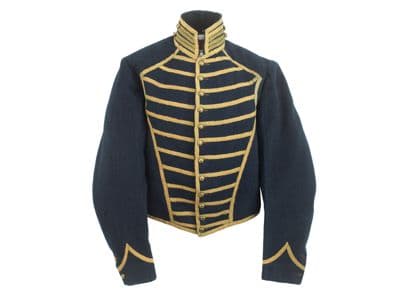
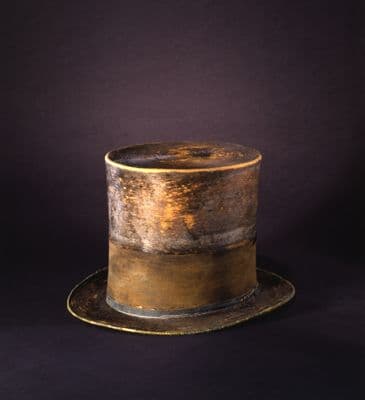
Lincoln's battered silk top hat and this sharp charcoal suit are separated by a century and a revolution in masculine dress codes, yet both depend on the same foundational gesture: the necktie as the thread that pulls formal menswear together. Where Lincoln's stovepipe hat announced gravity and authority through sheer vertical ambition, the modern suit achieves the same effect through precision tailoring and that crisp white shirt collar framing the tie's knot.
Worn with·dress shirtWorn with·necktie
SHARED40 years · cross-culture
The tan three-piece suit from the '70s and the charcoal gray suit from the 2000s reveal how drastically lapel proportions can shift cultural meaning. The vintage suit's wide, almost aggressive lapels and flared trousers scream leisure-class swagger, while the modern suit's narrow lapels and slim cut whisper corporate restraint.
Pull the Thread→
Follow this garment wherever the graph leads