SMITHSONIAN
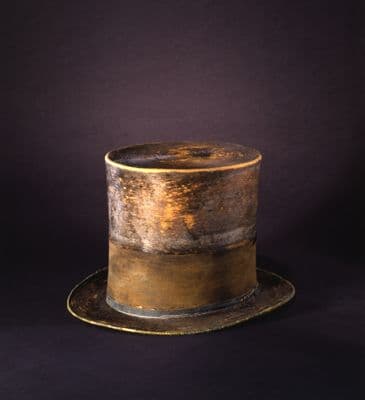
Abraham Lincoln's Top Hat
Edwardian · 1900s · American
Production
handmade
Material
silk plush
Culture
American
Influences
mid-19th century formal menswear
A weathered black silk plush top hat showing significant age and wear. The crown stands approximately 6 inches tall with straight sides and a flat top, characteristic of mid-19th century formal menswear that continued into the Edwardian period. The brim extends roughly 2.5 inches from the crown with a subtle upward curl at the edges. The silk plush surface shows extensive patina, with areas of brown discoloration and worn patches revealing the underlying felt structure. A narrow grosgrain ribbon band encircles the base of the crown. The hat's construction follows traditional millinery techniques with a stiffened felt core covered in silk plush, representing the pinnacle of formal masculine headwear during Lincoln's era and beyond.
hatstraight
Connected To
Worn with·dress shirtWorn with·necktie
SHARED80 years · cross-culture · cross-category
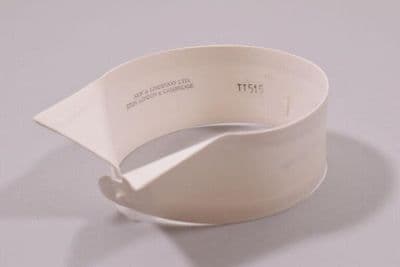
That battered silk top hat, with its scuffed crown and worn gilt band, represents the last gasp of formal masculine authority—a towering monument to 19th-century propriety that literally elevated its wearer above the crowd. The pristine white plastic collar, curved like a minimalist sculpture, strips away all that Victorian pomp to reveal the same impulse: the need for a crisp, controlled neckline that signals respectability.
Text46%
Image52%
Entity26%

Worn with·dress shirtWorn with·necktie
SHARED110 years · cross-culture · cross-category
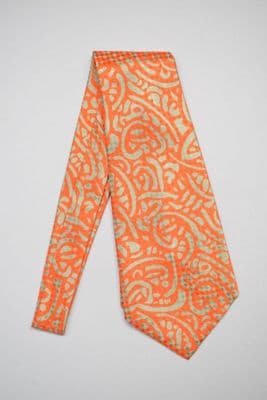
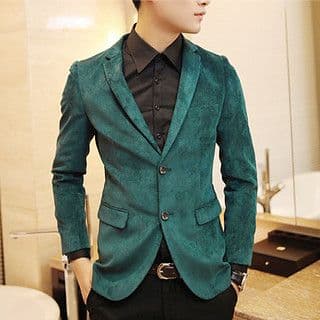
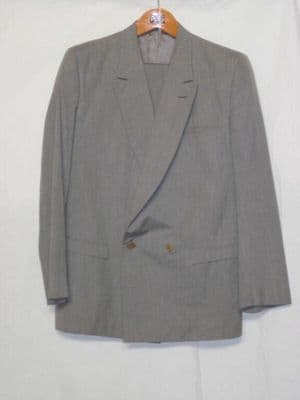
Lincoln's battered silk top hat and this sharp charcoal suit are separated by a century and a revolution in masculine dress codes, yet both depend on the same foundational gesture: the necktie as the thread that pulls formal menswear together. Where Lincoln's stovepipe hat announced gravity and authority through sheer vertical ambition, the modern suit achieves the same effect through precision tailoring and that crisp white shirt collar framing the tie's knot.
Worn with·dress shirt
SHARED120 years · cross-culture · cross-category
Text44%
Image51%
Worn with·dress shirt
SHARED80 years · cross-culture · cross-category
Text47%
Image55%
Pull the Thread→
Follow this garment wherever the graph leads