SMITHSONIAN
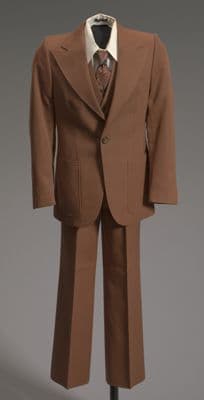
Camel Brown Wool Blend Three-Piece Leisure Suit
1970s · 1970s · American
Production
ready-to-wear
Material
wool blend
Culture
American
Movement
Disco
Influences
1970s leisure suit styling · wide lapel trend
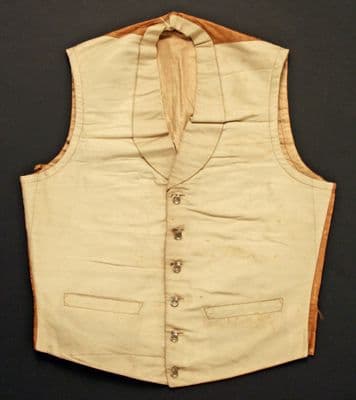
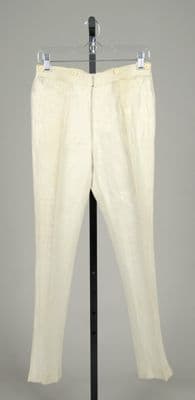
A camel-colored three-piece suit featuring the characteristic wide peaked lapels and relaxed silhouette of 1970s menswear. The ensemble includes a single-breasted jacket with notched lapels, matching vest, and straight-leg trousers. The jacket displays the era's preference for softer construction and wider proportions compared to earlier decades. The wool blend fabric appears to have a smooth finish typical of synthetic-wool blends popular in the period. The styling reflects the influence of leisure suits and the broader, more casual approach to formal menswear that emerged during the disco era, moving away from the narrow silhouettes of the 1960s.
jacketregular fithip length
Connected To
Movement·DiscoWorn with·dress shirt
SHAREDsame era · cross-culture · cross-category
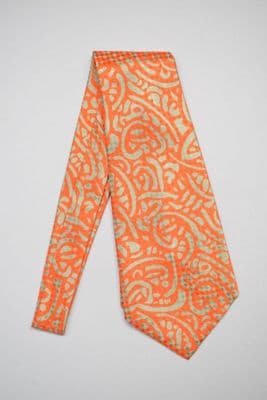
That camel three-piece suit and orange paisley kipper tie are both children of the same 1970s impulse to reject the gray flannel straightjacket of the previous decade—one through sheer scale, the other through sheer width. The suit's earthy brown wool and relaxed proportions promised leisure over labor, while that orange silk tie, fat as a dinner napkin and loud as a traffic cone, turned the conservative necktie into a billboard for male peacocking.

Pull the Thread→
Follow this garment wherever the graph leads