SMITHSONIAN
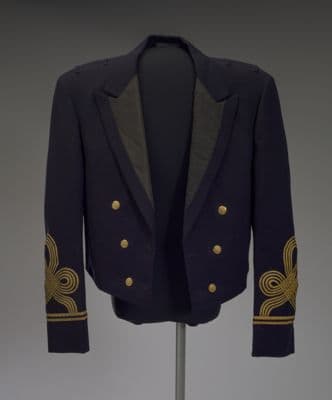
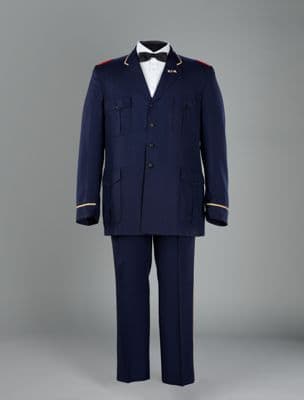
Navy Blue Military Double-Breasted Uniform Jacket
1950s · 1950s · African American
Production
ready-to-wear
Material
polyester cotton blend
Culture
African American
Movement
Nation of Islam · Civil Rights Movement · New Look / Post-War
Influences
military dress uniform · 1950s business suit
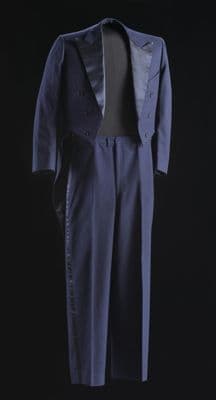
A formal navy blue uniform consisting of a double-breasted jacket and matching trousers. The jacket features peaked lapels, gold-toned buttons arranged in two vertical rows, and gold braiding or piping along the sleeve cuffs and collar edges. Two chest pockets with flaps are visible, along with what appears to be insignia or patches on the upper sleeves. The garment is constructed with sharp, military-inspired tailoring typical of 1950s menswear, emphasizing a disciplined, authoritative silhouette. The uniform represents the Nation of Islam's Fruit of Islam security force dress code, reflecting the organization's emphasis on dignity, discipline, and African American self-determination during the Civil Rights era.
jacketregular fithip length
Connected To
61%
Influences·military dress uniform
SHARED50 years · cross-culture · cross-category
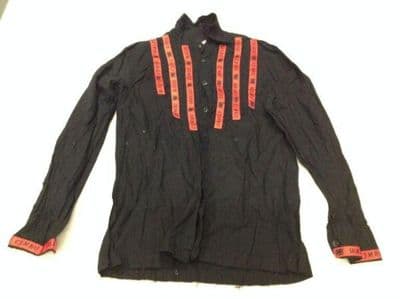
That crisp navy uniform with its gold braiding and ceremonial double-breasted cut finds its rebellious descendant in the black shirt's subversive ribbon detailing—both garments mine military dress codes, but where the 1950s jacket speaks in the formal language of honor and hierarchy, the 2000s piece strips away the pomp to leave just the decorative traces.
Echoes Across Time
1950s → 2000s · 50yr61%
SHARED
That crisp navy uniform with its gold braiding and ceremonial double-breasted cut finds its rebellious descendant in the black shirt's subversive ribbon detailing—both garments mine military dress codes, but where the 1950s jacket speaks in the formal language of honor and hierarchy, the 2000s piece strips away the pomp to leave just the decorative traces.
Influences·military dress uniform

2020s → 1950s · 60yr57%
Pull the Thread→
Follow this garment wherever the graph leads