SMITHSONIAN
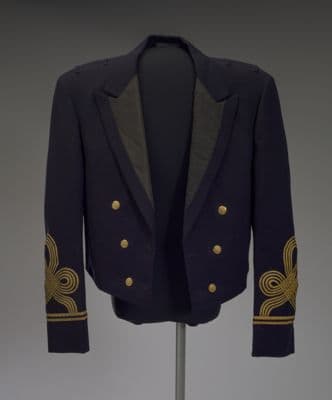
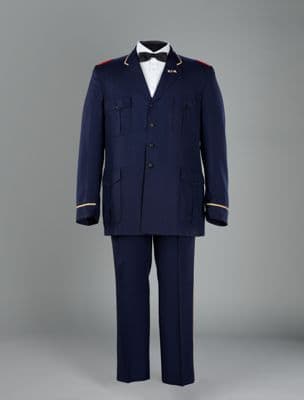
Navy Blue Wool Military Mess Dress Jacket
Wartime / Utility Fashion · 1940s · American
Production
handmade
Material
wool
Culture
American
Influences
Victorian military dress uniform tradition
A navy blue military mess dress jacket featuring a double-breasted front with six gold buttons arranged in two parallel columns. The jacket displays peaked lapels with contrasting black satin or grosgrain facing. Gold braided sleeve decorations extend from the cuffs partway up each forearm, featuring curved geometric patterns typical of military rank insignia or unit designations. The wool construction appears substantial and formal, with precise tailoring creating a fitted silhouette through the torso. This style represents the formal evening uniform worn by Army officers during World War II era social and ceremonial functions.
jacketregular fithip length
Connected To
Worn with·bow tieWorn with·dress shirt
SHARED10 years · cross-culture
These two navy jackets reveal how military dress codes create their own visual language across decades and ranks. The first uniform's crisp double-breasted front and modest sleeve stripes speak to everyday service protocol, while the second jacket's elaborate gold braiding and mess dress formality mark it as ceremonial wear for officers' dining halls.
Worn with·bow tieWorn with·dress shirt
SHARED60 years · cross-culture
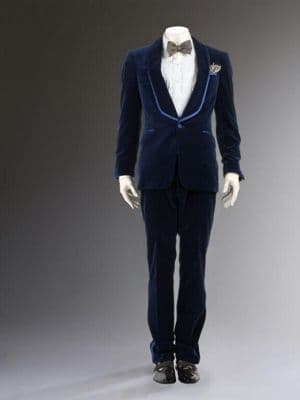
The silk velvet dinner suit's plush midnight surface and the military mess jacket's crisp wool both telegraph the same aristocratic swagger, just through different vocabularies of power. Where the contemporary piece whispers wealth through its liquid sheen and shawl lapels, the wartime jacket shouts rank through gold braiding and brass buttons—both designed to command a room, whether at a charity gala or officers' club.
Worn with·dress shirtFunction·military-uniform
SHARED60 years · cross-category
Text69%
Worn with·dress shirtTechnique·hand-embroidery
SHARED90 years · cross-culture · cross-category
Text56%
Pull the Thread→
Follow this garment wherever the graph leads