SMITHSONIAN
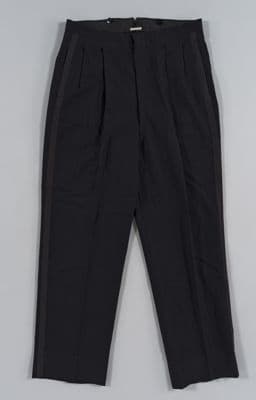
Black Wool Blend High-Waisted Pleated Trousers with Suspenders
Roaring Twenties / Art Deco · 1930s · American
Production
ready-to-wear
Material
wool blend
Culture
American
Influences
1930s high-waisted menswear · Depression-era tailoring
High-waisted men's trousers in black wool blend featuring deep front pleats that create fullness through the hip and thigh. The trousers have a substantial rise that would sit at the natural waist, characteristic of 1930s menswear proportions. Multiple knife pleats are pressed into the front panels, tapering to a narrower leg opening. The waistband appears substantial with what looks like button or tab closure details. The fabric has a smooth, tailored appearance typical of quality suiting wool. These represent the shift from 1920s looser fits to the more structured, fitted silhouette that emerged during the Depression era.
pantswide legfloor length
Connected To
56%
Worn with·dress shirtWorn with·suit jacket
SHAREDcross-culture · cross-category
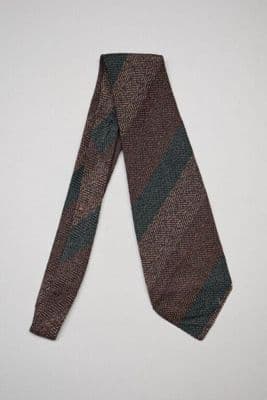
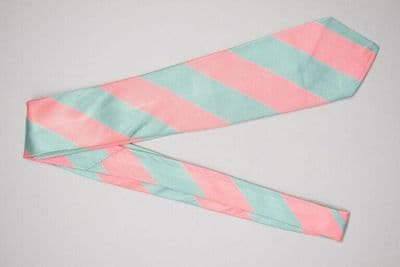
These pieces share the crisp geometry of mid-century menswear tailoring, though separated by three decades and an ocean. The trousers' knife-sharp pleats echo the tie's clean diagonal stripes—both rely on precise linear repetition to create visual interest from fundamentally conservative silhouettes.
Pull the Thread→
Follow this garment wherever the graph leads