V&A
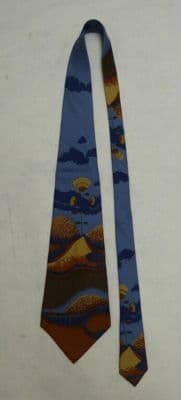
Navy Blue Silk Wide Tie with Geometric Print
1970s · 1970s · British
Designer
Take 6
Production
ready-to-wear
Material
printed silk
Culture
British
Movement
Psychedelic Art · Disco
Influences
psychedelic art movement · abstract expressionism
A wide-cut necktie characteristic of 1970s menswear, featuring an abstract geometric print in navy blue, golden yellow, rust orange, and purple tones. The tie displays the era's typical broad silhouette, measuring approximately 4-5 inches at its widest point. The printed silk fabric shows a bold, painterly design with overlapping angular shapes and organic forms that create a dynamic, almost psychedelic pattern. The construction appears machine-sewn with clean edges and proper interfacing. The vibrant color palette and abstract motifs reflect the Glam Rock era's embrace of flamboyant, artistic expression in menswear, moving away from conservative solid colors toward more adventurous visual statements.
tie
Connected To
Worn with·dress shirtWorn with·suit jacket
SHAREDsame era · cross-culture
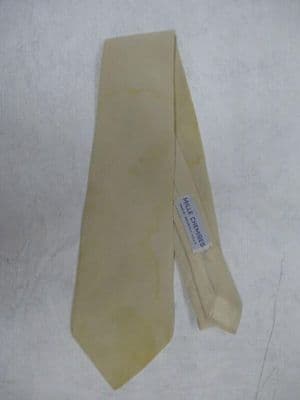
These two ties capture the '70s at its most schizophrenic—the cream silk's monastic simplicity sits alongside the navy's psychedelic geometry like a meditation next to a migraine. Both sport that era's characteristic width that could double as a napkin, but where the cream tie whispers boardroom restraint, the geometric explosion suggests someone raided both Pucci's studio and a kaleidoscope factory.
Pull the Thread→
Follow this garment wherever the graph leads