THE MET
White Cotton Detachable Formal Shirt Collar
Victorian Late / Bustle · 1880s-1890s · American
Production
handmade
Material
cotton
Culture
American
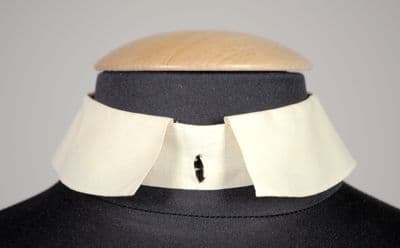
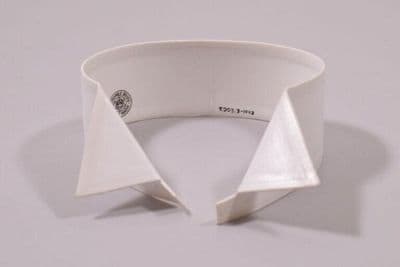
A formal detachable shirt collar constructed from starched white cotton with precise geometric proportions typical of Victorian menswear. The collar features a tall band that would sit close to the neck, with wide triangular points that fold down symmetrically. The construction shows crisp edges and sharp creases, indicating heavy starching for structural support. A small buttonhole is visible at the center front for collar stud attachment. The collar demonstrates the period's emphasis on rigid formality and precise tailoring, designed to be worn with a separate shirt and secured with collar studs at front and back.
shirt/blousehigh neck
Connected To
Worn with·collar studsWorn with·dress shirt
SHARED40 years · cross-culture · cross-category
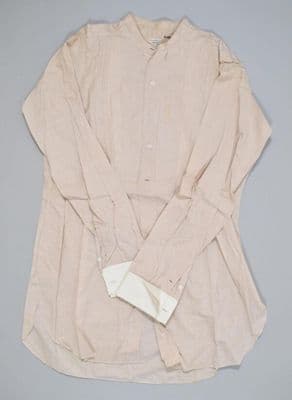
These two starched white cotton collars trace the evolution of masculine formality from Victorian practicality to Jazz Age precision. The earlier detachable collar, with its rounded edges and utilitarian buttonhole, was born from an era when laundering a collar was easier than washing an entire shirt—a democratic innovation that let working men maintain crisp necklines without constant shirt changes.
Text82%
Image78%
Entity34%
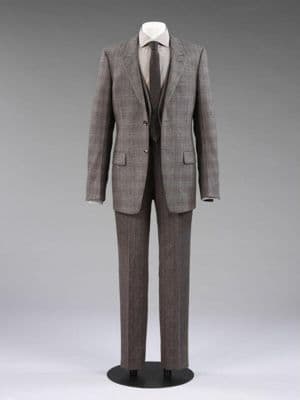
Worn with·dress shirtWorn with·necktie
SHARED130 years · cross-culture · cross-category
That starched white collar, with its precise fold and single stud closure, is the great-grandfather of every power suit that followed — including this sleek charcoal number with its knife-sharp lapels and tailored silhouette. The Victorian collar was a detachable symbol of respectability that required daily laundering and meticulous maintenance, while today's suit integrates that same crisp white shirt collar as a permanent fixture beneath the jacket's structured frame.
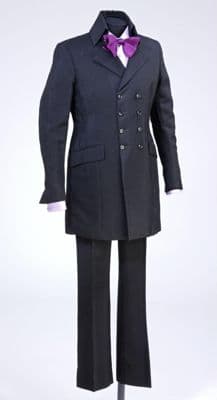
Worn with·dress shirtWorn with·necktie
SHARED80 years · cross-culture · cross-category
That starched white collar, with its knife-sharp edges and ceremonial formality, carries the same DNA as the 1970s suit's aggressively structured lapels — both are exercises in architectural precision that announce their wearer's seriousness.
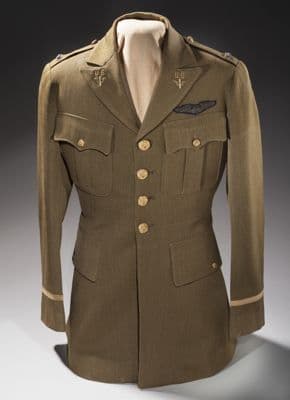
Worn with·dress shirtWorn with·necktie
SHARED60 years · cross-category
That crisp white collar with its precise points and buttonhole eyelet speaks the same formal language as the Air Corps coat's razor-sharp lapels and military bearing—both demand the punctuation of a proper necktie and the discipline of a pressed shirt beneath. Sixty years separate the Victorian gentleman's detachable collar from the WWII officer's uniform, but they're united by an American obsession with clean lines and institutional authority, whether boardroom or cockpit.
Pull the Thread→
Follow this garment wherever the graph leads