Wartime / Utility Fashion · 1940s · American
Production
mass-produced
Material
wool gabardine
Culture
American
Influences
military dress uniform tradition
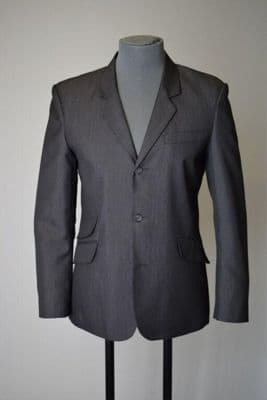
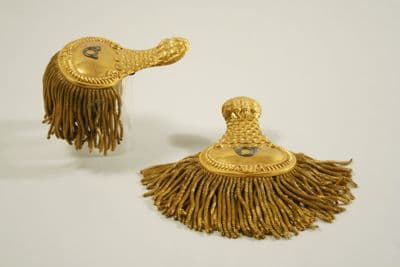
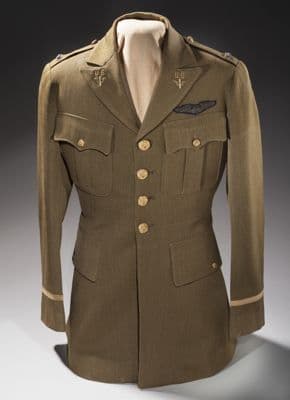
A United States Army Air Corps officer's service coat in regulation olive drab wool gabardine. The jacket features a fitted military silhouette with peaked lapels, four-pocket configuration with flap closures, and gold-toned metal buttons. Shoulder boards display officer's rank insignia, while the left breast pocket bears the distinctive winged propeller insignia of the Army Air Corps. The coat is constructed with precise military tailoring, including reinforced seams and structured shoulders. Tan piping edges the collar and cuffs, providing regulation contrast trim. The garment exemplifies standardized military dress requirements of the World War II era, combining functional design with ceremonial elements appropriate for an officer's dress uniform.
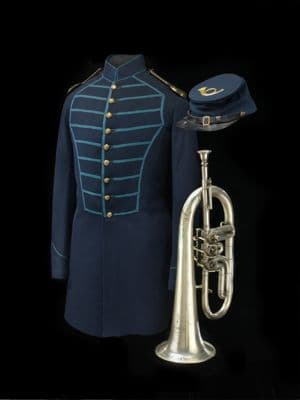
That Victorian frock coat's elaborate frogging and ceremonial swagger found its way into the Army Air Corps jacket's DNA, but stripped of all the peacocking. Where the earlier coat announces rank through ornamental braiding that cascades down the chest like military sheet music, the WWII officer's jacket distills that same authority into clean button lines and restrained pocket flaps.
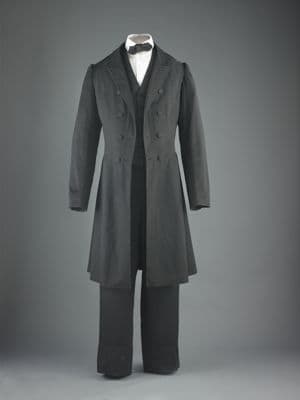

That Victorian frock coat's elaborate frogging and ceremonial swagger found its way into the Army Air Corps jacket's DNA, but stripped of all the peacocking. Where the earlier coat announces rank through ornamental braiding that cascades down the chest like military sheet music, the WWII officer's jacket distills that same authority into clean button lines and restrained pocket flaps.


Follow this garment wherever the graph leads
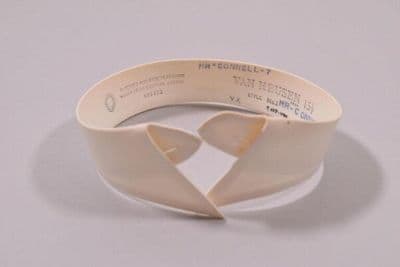
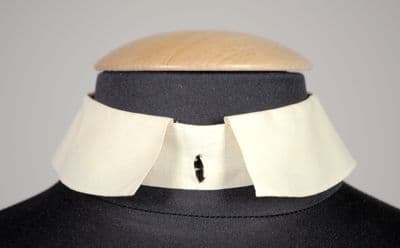
The crisp geometry of that detachable Edwardian collar—its precise stand and sharp points—lives on in the military jacket's knife-edge lapels and the way its breast pockets snap to attention with geometric precision. What separates them is forty years and a world war, but both garments understand that authority comes from angles: the collar's starched defiance of gravity, the jacket's shoulders that refuse to slouch.
The austere dignity of Lincoln's dark wool frock coat finds its echo in this Army Air Corps officer's jacket, both garments wielding the authority of olive and charcoal tones while maintaining the crisp geometry of military bearing.
That crisp white collar with its precise points and buttonhole eyelet speaks the same formal language as the Air Corps coat's razor-sharp lapels and military bearing—both demand the punctuation of a proper necktie and the discipline of a pressed shirt beneath. Sixty years separate the Victorian gentleman's detachable collar from the WWII officer's uniform, but they're united by an American obsession with clean lines and institutional authority, whether boardroom or cockpit.
The austere dignity of Lincoln's dark wool frock coat finds its echo in this Army Air Corps officer's jacket, both garments wielding the authority of olive and charcoal tones while maintaining the crisp geometry of military bearing.