V&A
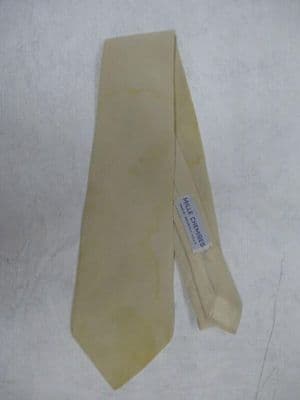
Cream Silk Necktie with Lustrous Finish
1970s · 1970s · British/American
Designer
Mille Chemises
Production
ready-to-wear
Material
silk
Culture
British/American
Movement
Hippie / Counterculture
A cream-colored silk necktie with a smooth, lustrous finish typical of quality silk construction. The tie displays the classic pointed blade shape with a standard width appropriate for 1970s menswear proportions. The fabric appears to be a plain weave silk with a subtle sheen, cut on the bias for proper drape when knotted. A white fabric label is visible on the narrow end, indicating commercial manufacture. The tie's neutral cream tone reflects the period's move toward softer, more natural color palettes in menswear, departing from the bold patterns popular earlier in the decade. The construction appears machine-sewn with clean finishing typical of ready-to-wear accessories from established manufacturers.
tie
Connected To
Movement·Hippie / CountercultureWorn with·dress shirtWorn with·suit jacket
SHAREDsame era · cross-culture
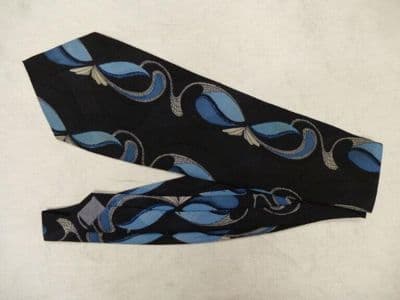
These ties capture the exact moment when menswear loosened its grip on propriety in the 1970s — one through sheer minimalism, the other through bohemian abandon. The cream silk's lustrous blankness reads like a gentleman's quiet rebellion against pattern and fuss, while the black tie's swirling blue paisley practically vibrates with psychedelic energy, its organic forms flowing like liquid mercury across the silk.
Text83%
Image82%
Movement·Hippie / CountercultureWorn with·dress shirtWorn with·suit jacket
SHARED10 years · cross-culture
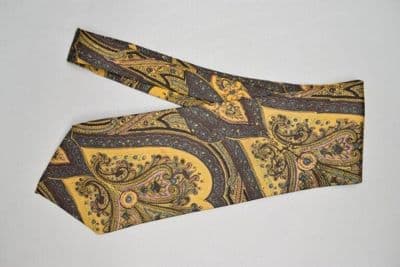
These two ties capture the schizophrenic nature of 1970s menswear, when the decade couldn't decide if it wanted to be buttoned-up or totally groovy. The plain cream silk represents the conservative holdout—that lustrous, almost bridal finish suggesting a man still trying to look respectable even as his lapels widened and his hair grew longer.
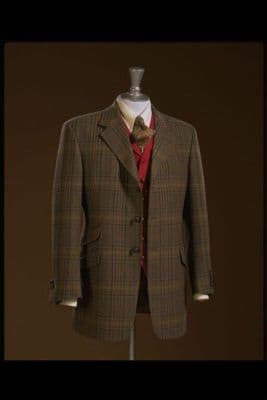
Worn with·dress shirtWorn with·suit jacket
SHARED20 years · cross-culture
These two ties capture the quiet revolution that happened to menswear between the Carter and Clinton eras. The pale silk number from the '70s, with its understated sheen and narrow proportions, speaks to an era when ties whispered rather than shouted—the kind of restrained luxury that paired with those soft-shouldered suits and wide lapels.
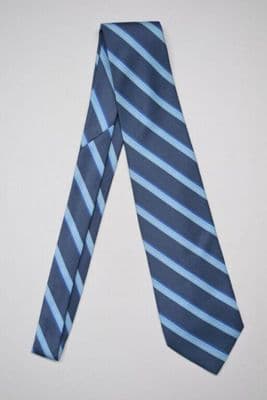
Worn with·dress shirtWorn with·suit jacket
SHARED10 years · cross-culture
These two ties capture the necktie's journey from understated WASP propriety to Italian theatricality in just a decade. The cream silk's monastic plainness—that almost chalky, matte finish that screams old-money restraint—gives way to the navy's confident diagonal stripes, which catch light like a semaphore of ambition. What connects them is the necktie's fundamental promise: that a strip of silk around your neck can telegraph exactly who you are, or who you're pretending to be.

Pull the Thread→
Follow this garment wherever the graph leads