
V&A
Burgundy Gold Navy Geometric Print Silk Tie
1990s · 1990s · British
Designer
Daks-Simpson
Production
ready-to-wear
Material
printed silk
Culture
British
Movement
Supermodel Era
A classic necktie in printed silk featuring a geometric pattern in burgundy red, gold, and navy blue. The tie displays a traditional width typical of 1990s business wear, with a structured drape when knotted. The geometric motifs appear to be arranged in a repeating diamond or medallion pattern across the silk surface. Made by Daks-Simpson, a British heritage brand known for quality menswear accessories, this tie represents the conservative yet refined aesthetic of 1990s professional dress. The silk has a smooth finish with subtle sheen, and the pattern shows precise registration typical of high-quality screen printing on silk textiles.
tie
Connected To
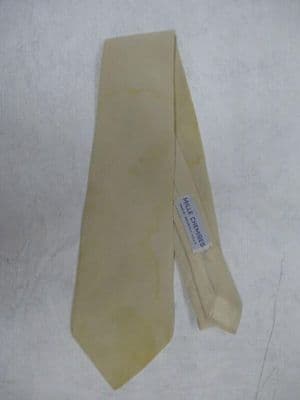
Worn with·dress shirtWorn with·suit jacket
SHARED20 years · cross-culture
These two ties capture the quiet revolution that happened to menswear between the Carter and Clinton eras. The pale silk number from the '70s, with its understated sheen and narrow proportions, speaks to an era when ties whispered rather than shouted—the kind of restrained luxury that paired with those soft-shouldered suits and wide lapels.
Text81%
Image70%
Entity24%
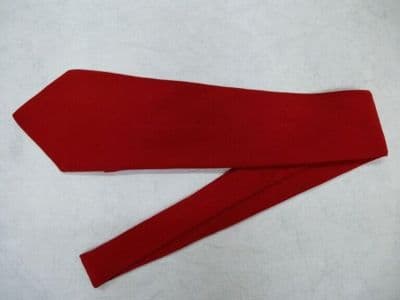
Worn with·dress shirtWorn with·suit jacket
SHARED20 years · cross-culture
That crimson ribbon of 1970s Italian silk and the geometric-patterned British tie from the '90s reveal how the necktie's fundamental DNA—that long diagonal slash of fabric meant to punctuate a man's torso—remained unchanged even as everything else shifted.
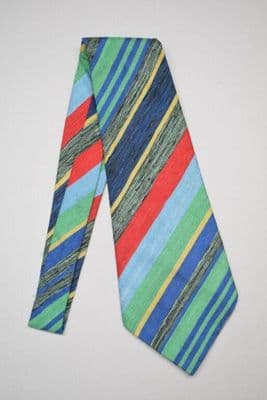
Worn with·dress shirtWorn with·suit jacket
SHARED20 years · cross-culture
These ties reveal how the same diagonal energy can serve completely different masters. The 1970s Indian piece treats stripes like brushstrokes—irregular widths in electric blues, greens, and coral that seem to vibrate against each other with handwoven spontaneity. Two decades later, the British tie disciplines that same diagonal impulse into a regimental precision, its burgundy and navy geometry as controlled as a Savile Row ledger.

Worn with·dress shirtWorn with·suit jacket
SHARED20 years · cross-culture
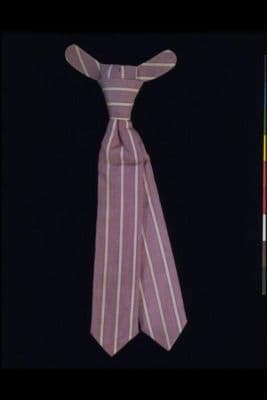
That pale mint knitted tie from 1970s Austria and the geometric-printed silk from 1990s Britain represent two opposing philosophies of masculine restraint. The Austrian piece, with its soft alpaca texture and gentle color, embodies the era's brief flirtation with sensitivity in menswear—a moment when ties could whisper rather than announce.
Echoes Across Time
Pull the Thread→
Follow this garment wherever the graph leads