1970s · 1960s · British
Designer
Turnbull & Asser
Production
ready-to-wear
Material
printed silk
Culture
British
Movement
Peacock Revolution · Hippie / Counterculture
Influences
Indian paisley textiles · psychedelic art movement
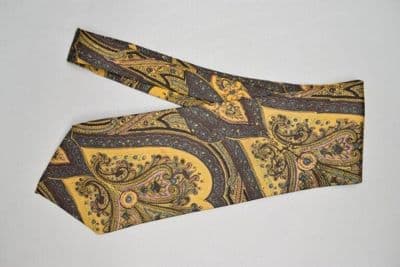
This kipper tie exemplifies the bold menswear revolution of the late 1960s with its dramatically widened silhouette that flares from approximately 2 inches at the neck to over 5 inches at the tip. The silk fabric features an intricate paisley pattern in golden yellow, dark brown, olive green, and burgundy, with swirling teardrop motifs and ornate botanical details that reflect the era's fascination with Eastern aesthetics. The print shows fine detail work with delicate line work and shading within each paisley form. This exaggerated width and psychedelic-influenced pattern represents the period's rejection of conservative narrow ties, embodying the peacock revolution in men's fashion that embraced color, pattern, and expressive silhouettes.


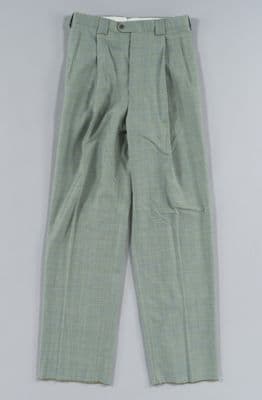
These two pieces speak the same language of masculine restraint, just with different accents. The herringbone trousers whisper their pattern through subtle texture and muted sage green, while the paisley tie shouts its swirls in golden silk — but both understand that a man's power lies in the details that reward closer inspection.


Follow this garment wherever the graph leads
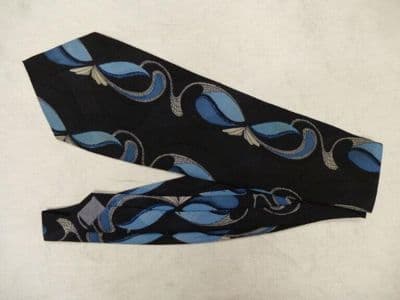
Both ties pulse with the same psychedelic DNA that made the 1970s neck a canvas for rebellion against corporate conformity. The French tie's blue crescents swim across black silk like Art Nouveau gone trippy, while the British kipper's golden paisley swirls could have been lifted from a Carnaby Street fever dream — both transforming the businessman's most conservative accessory into a portal to altered consciousness.
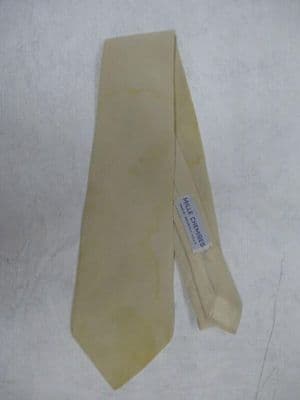
These two ties capture the schizophrenic nature of 1970s menswear, when the decade couldn't decide if it wanted to be buttoned-up or totally groovy. The plain cream silk represents the conservative holdout—that lustrous, almost bridal finish suggesting a man still trying to look respectable even as his lapels widened and his hair grew longer.
These two ties capture the 1970s menswear revolution from opposite angles — one through texture, the other through sheer visual assault. The mint green alpaca knit whispers its rebellion with that chunky, almost hand-crafted surface that rejected the slick corporate silk standard, while the golden paisley silk screams it with those swirling, psychedelic patterns that could double as wallpaper in a Marrakech riad.
These ties reveal how menswear's relationship with death imagery shifted from the cheeky to the sinister across a single decade. The 1970s kipper tie flaunts its paisley swirls in golden yellows—decorative memento mori disguised as groovy pattern-making, where skulls peek out like Easter eggs among the baroque flourishes.