THE MET
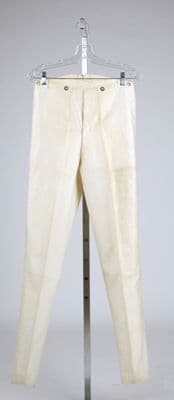
Cream Wool Military Dress Trousers
Edwardian · 1900s · American or European
Production
mass-produced
Material
wool twill
Culture
American or European
Influences
Edwardian military dress codes
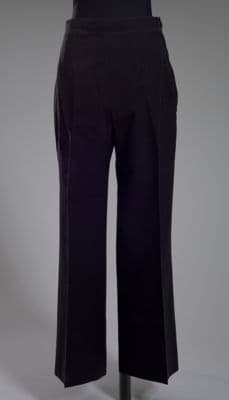
High-waisted military trousers in cream-colored wool with a straight, narrow leg silhouette characteristic of early 1900s military dress uniforms. The trousers feature a high button fly closure and appear to have suspender buttons at the waistband. The fabric shows a smooth twill weave with clean, pressed creases down the front of each leg. The cut is fitted through the waist and hips with a straight fall to the ankle, typical of formal military dress codes of the Edwardian period. The light color suggests these were likely summer dress uniform trousers or tropical service wear.
pantsstraightfloor length
Connected To
Worn with·military beltWorn with·military tunicFunction·military-uniform
SHAREDsame era · cross-culture
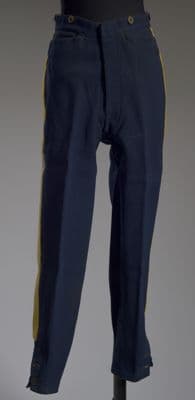
These two pairs of military trousers reveal how the same era's obsession with precision tailoring played out across different branches of service. The cream dress trousers, with their razor-sharp front creases and formal straight leg, speak to parade ground ceremony, while the navy cavalry breeches embrace pure function — that dramatic flare through the thigh and tight grip from knee to ankle designed for a life spent in the saddle.
Text73%
Entity51%
Worn with·military beltFunction·military-uniform
SHARED60 years · cross-culture · cross-category
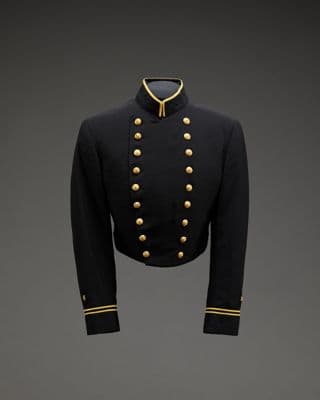
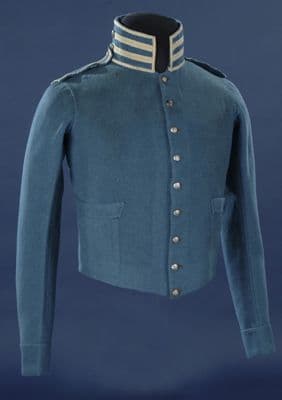
That blue-gray wool coat with its regimental collar stripes and brass button march down the front speaks the same military language as those high-waisted cream trousers with their side-seam piping, even across six decades of American uniform evolution. The coat's formal stance—cropped at the waist, shoulders squared for parade ground precision—finds its echo in the trousers' knife-sharp creases and that telltale military rise that hits well above the natural waist.
Worn with·military beltFunction·military-uniform
SHARED40 years · cross-culture · cross-category
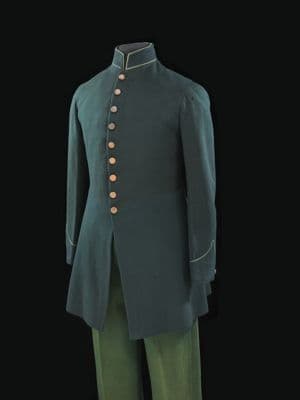
The brass buttons marching down that forest green frock coat tell the same story as the sharp military crease pressed into those cream wool trousers — both garments speak the language of regimental precision, just in different dialects. The Victorian coat's high collar and fitted torso project authority through silhouette, while the Edwardian trousers achieve it through that knife-edge press and the subtle shaping at the waist.
Worn with·dress shirtFunction·military-uniform
SHARED90 years · cross-culture
Text74%
Pull the Thread→
Follow this garment wherever the graph leads