Victorian Late / Bustle · 1860s · American
Production
handmade
Material
wool broadcloth
Culture
American
Influences
Civil War military tailoring · European military dress codes
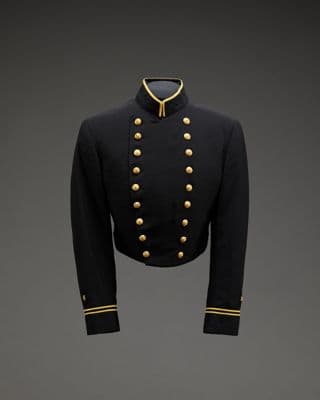
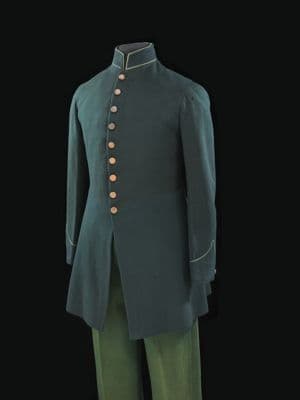
A forest green wool broadcloth military frock coat featuring a high standing collar and double-breasted front closure with two vertical rows of brass buttons. The coat extends to mid-thigh length with a fitted waist and flared skirt typical of Civil War era military tailoring. The sleeves are fitted with functional button cuffs, and the garment displays precise military construction with clean lines and structured shoulders. This represents the distinctive uniform of the Berdan Sharpshooters, an elite Union Army regiment known for their marksmanship skills during the American Civil War, distinguished by their green uniforms rather than the standard blue.


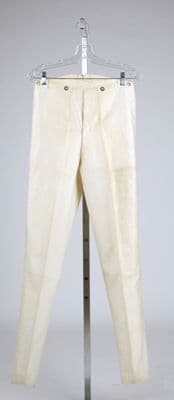
The brass buttons marching down that forest green frock coat tell the same story as the sharp military crease pressed into those cream wool trousers — both garments speak the language of regimental precision, just in different dialects. The Victorian coat's high collar and fitted torso project authority through silhouette, while the Edwardian trousers achieve it through that knife-edge press and the subtle shaping at the waist.


Follow this garment wherever the graph leads
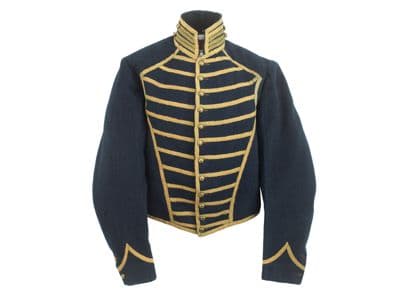
These two military jackets reveal how the Victorian obsession with martial pageantry played out differently across the Atlantic. The American frock coat's restrained elegance—that long, lean silhouette with its simple brass button parade down the front—speaks to a young republic's more democratic approach to military dress, while the British hussar-style jacket explodes with gold frogging and braided chest armor that screams old-world regimental pride.
The brass buttons marching down that forest green frock coat tell the same story as the sharp military crease pressed into those cream wool trousers — both garments speak the language of regimental precision, just in different dialects. The Victorian coat's high collar and fitted torso project authority through silhouette, while the Edwardian trousers achieve it through that knife-edge press and the subtle shaping at the waist.
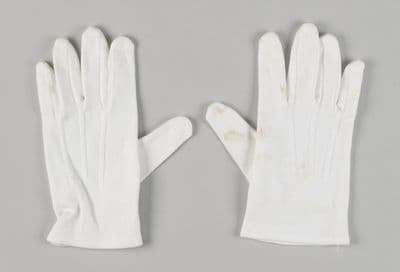
That forest green frock coat with its rigid stand collar and parade of brass buttons down the front carries the same authoritarian geometry as those crisp white dress gloves—both designed to transform the wearer into a symbol of institutional power rather than an individual.
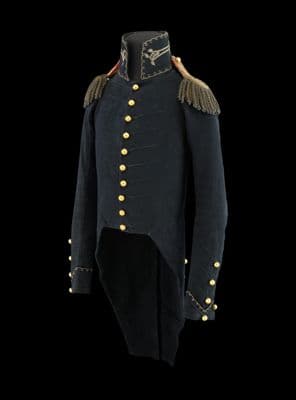
These two military coats trace the evolution of American martial swagger through wool and brass. Jackson's earlier uniform still carries Napoleonic theatricality—those fringed epaulets and the dramatic cutaway tail speak to an era when officers dressed like romantic heroes, all flourish and imperial posturing.
That forest green frock coat with its rigid stand collar and parade of brass buttons down the front carries the same authoritarian geometry as those crisp white dress gloves—both designed to transform the wearer into a symbol of institutional power rather than an individual.