SMITHSONIAN
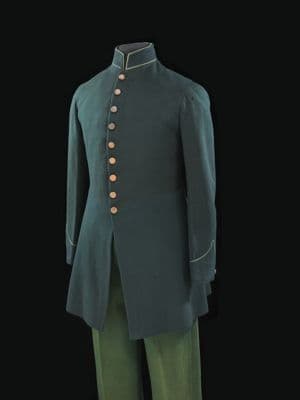
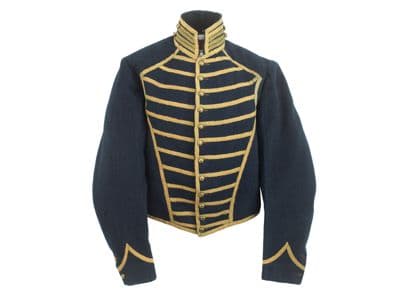
Dark Navy Wool Military Dress Jacket
Victorian Early / Crinoline · 1850s · British
Production
handmade
Material
wool
Culture
British
Influences
military frogging tradition · Hussar jacket styling
A dark navy wool military jacket featuring elaborate gold braiding in horizontal chevron patterns across the chest front. The high-standing collar is trimmed with matching gold braid. The jacket has a fitted silhouette that ends at the natural waist, with long sleeves bearing gold chevron details at the cuffs. The front closure appears to be concealed beneath the decorative braiding. This represents the formal dress uniform style typical of British military musicians in the 1850s, with the ornate gold trim indicating rank and regimental designation. The construction shows precise military tailoring with structured shoulders and a nipped waist characteristic of mid-Victorian military dress.
jackettight fithigh neckhip length
Connected To
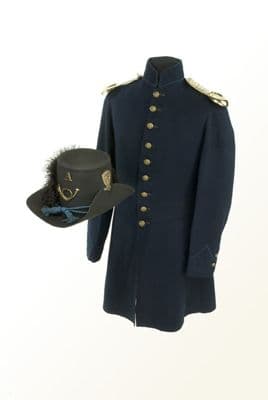
Worn with·military capWorn with·military trousersFunction·military-uniform
SHARED10 years · cross-culture
Echoes Across Time
Empire / Regency → Victorian Early / Crinoline · 40yr64%
SHARED
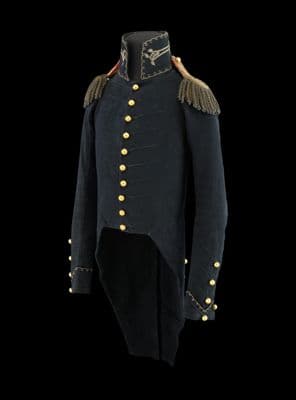
These two military dress jackets reveal how the Napoleonic aesthetic conquered Anglo-American military fashion for decades. Jackson's coat, with its dense constellation of gilt buttons marching down the front and those swaggering epaulettes, speaks the same visual language as the later British hussar-style jacket with its cage of gold braiding across the chest—both borrowing the Continental European taste for theatrical military display that made officers look like exotic birds of war.
Worn with·military trousersTechnique·hand-embroideryFunction·military-uniform
Pull the Thread→
Follow this garment wherever the graph leads