SMITHSONIAN
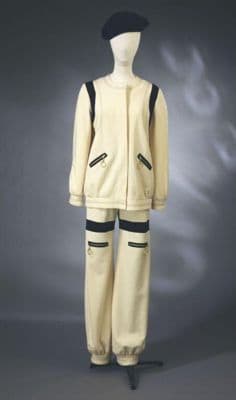
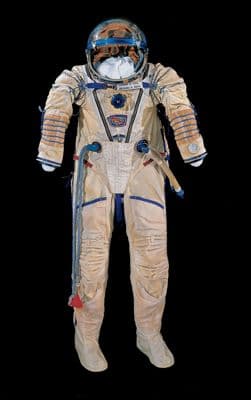
Cream Synthetic Canvas Pressure Suit with Blue Accents
1960s · 2000s · Russian
Production
handmade
Material
synthetic canvas beta cloth
Culture
Russian
Movement
Space Age
Influences
Soviet space program design · military flight suit construction
This Russian Sokol KV-2 pressure suit features a cream-colored synthetic canvas beta cloth construction with blue accent stripes and silver metallic components. The suit displays characteristic space-age engineering with articulated joints at shoulders, elbows, and knees to maintain mobility under pressure. The helmet assembly includes a clear visor with blue trim and integrated communication systems. Multiple connection ports, gauges, and control panels are visible across the chest and arms. The suit's construction emphasizes functional durability over aesthetics, with reinforced seaming and modular components typical of Soviet space program design philosophy during the height of the space race.
jumpsuittight fitfloor length
Connected To
Movement·Space AgeWorn with·bootsWorn with·helmetFunction·
Echoes Across Time
1960s → 1960s · 40yr59%
SHARED
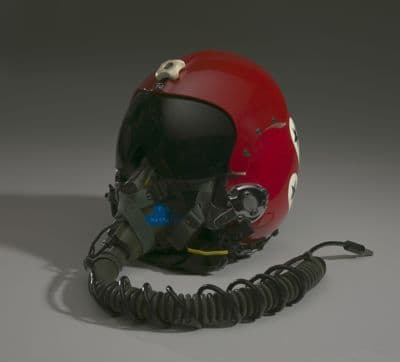
These two pieces of Cold War-era protective gear reveal how the Space Race turned functional military equipment into inadvertent design statements. The Russian pressure suit's quilted cream canvas with electric blue piping and the American pilot's helmet with its cherry-red shell and black visor share that distinctly 1960s faith in synthetic materials and bold color blocking—both treating the human body as a component that needed sleek, modernist packaging.
Movement·Space AgeTechnique·metalworkFunction·military-uniform
Pull the Thread→
Follow this garment wherever the graph leads