V&A
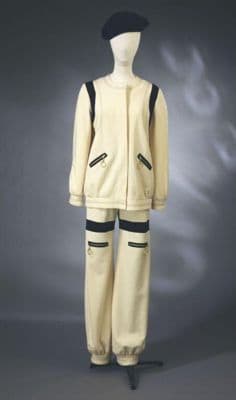
Cream Wool Knit Space Age Trouser Suit
1960s · 1960s · British
Production
ready-to-wear
Material
wool knit
Culture
British
Movement
Space Age · Mod
Influences
mod geometric styling · space age futurism
A two-piece wool knit ensemble featuring a cream-colored tunic top with contrasting navy blue trim and matching trousers. The tunic displays a geometric construction with diagonal zip closures creating angular lines across the front, characteristic of 1960s space age design. The sleeves are set-in with navy cuffs, and the hemline falls at hip length. The trousers feature horizontal navy stripes at knee level, creating visual breaks in the silhouette. The overall construction emphasizes clean geometric lines and functional details like exposed zippers, reflecting the era's fascination with technology and futuristic aesthetics. The relaxed fit and knit construction represent the period's move away from structured tailoring toward more casual, youth-oriented fashion.
jumpsuitstraightcrew neckfloor length
Connected To
Influences·mod geometric stylingMovement·ModMovement·Space Age

Pull the Thread→
Follow this garment wherever the graph leads