V&A
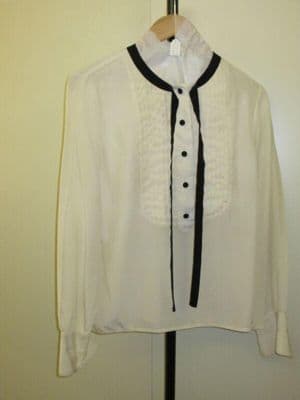
Cream Silk Blouse with Black Contrast Trim
1960s · 1960s · French
Designer
Chanel
Production
haute couture
Material
silk crepe
Culture
French
Movement
Mod · Space Age
Influences
mod geometric styling · architectural minimalism
A cream silk blouse featuring a distinctive high rounded collar with black contrast binding. The front placket extends from collar to hem with black button closure and matching black trim creating clean geometric lines. The silhouette is relaxed through the body with set-in sleeves that appear slightly gathered at the cuffs. The fabric appears to be a lightweight silk crepe with a matte finish. The contrast black trim creates sharp definition against the cream base, emphasizing the architectural quality typical of 1960s design. The collar stands away from the neck in a rounded band style, while the front opening creates a vertical line that extends the full length of the garment.
shirt/blouseregular fithigh neckhip length
Connected To
Influences·mod geometric stylingMovement·ModMovement·Space Age
Echoes Across Time

2000s → 1960s · 50yr62%
SHARED
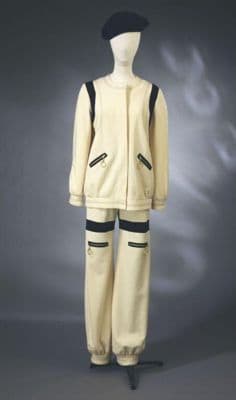
These two pieces speak the same visual language of graphic precision, separated by fifty years but united by their devotion to the power of contrast. The blue dress deploys bold color-blocking like a Mondrian painting made wearable, while the silk blouse achieves the same architectural effect through delicate black piping that traces its placket and collar like ink on paper.
Influences·architectural minimalism

2010s → 1960s · 60yr49%
Pull the Thread→
Follow this garment wherever the graph leads