V&A
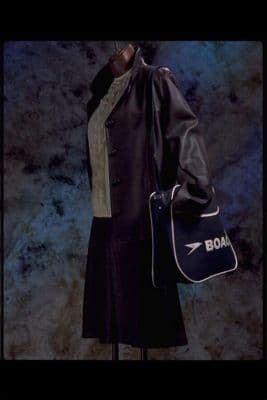
Brown Leather Jacket and Miniskirt Suit
1960s · 1960s · British
Designer
Paul Blanche
Production
ready-to-wear
Material
brown leather
Culture
British
Movement
Mod · Space Age
Influences
Mod geometric tailoring · Space Age minimalism
A brown leather two-piece suit consisting of a structured jacket and miniskirt, characteristic of mid-1960s London fashion. The jacket features a clean, geometric silhouette with minimal lapels and appears to have a straight, boxy cut that falls to hip length. The leather has a smooth, polished finish typical of quality garment leather. The miniskirt sits well above the knee, reflecting the revolutionary hemline changes of the Space Age era. The suit demonstrates the period's embrace of non-traditional materials like leather for everyday wear, moving beyond its previous associations with outerwear or specialized garments. The overall construction shows precise tailoring adapted to leather's unique properties, with clean lines that emphasize the material's structural qualities rather than draping.
jacketstraightcollarlesship length
Connected To
Movement·ModMovement·Space Age
SHAREDsame era · cross-culture
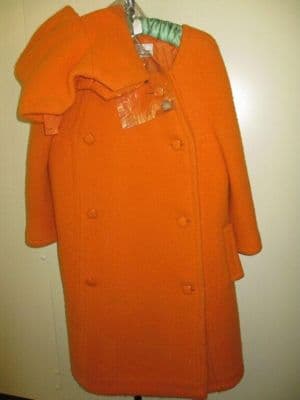
That orange coat's sculptural A-line and oversized hood capture the same space-age optimism as the brown leather suit's geometric precision, both born from the mid-60s moment when fashion looked to the future and found it in bold, architectural shapes. The coat's tangerine wool feels like Pierre Cardin's cosmic vision, while the leather suit's sharp tailoring and mini proportions scream Swinging London—two sides of the Mod coin that turned women into sleek, modern sculptures.


Pull the Thread→
Follow this garment wherever the graph leads