SMITHSONIAN
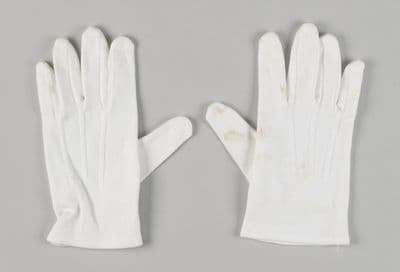
White Cotton Military Dress Uniform Gloves
Wartime / Utility Fashion · 1990s · American
Production
mass-produced
Material
cotton
Culture
American
Influences
military dress uniform tradition
A pair of white cotton dress gloves designed for military formal occasions. The gloves feature a close-fitting construction with individually tailored fingers and thumbs, demonstrating precise military tailoring standards. The cotton fabric appears smooth and substantial, appropriate for ceremonial wear. The wrist length extends just past the wrist bone with clean, finished edges. These gloves represent standard U.S. Army dress uniform accessories, designed to complement formal military attire during official ceremonies, parades, and diplomatic functions. The pristine white color and structured fit reflect military attention to detail and uniformity requirements.
glovetight fitwrist-length
Connected To
Worn with·military capFunction·military-uniform
SHARED140 years · cross-culture · cross-category
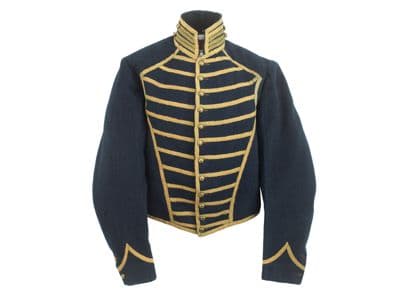
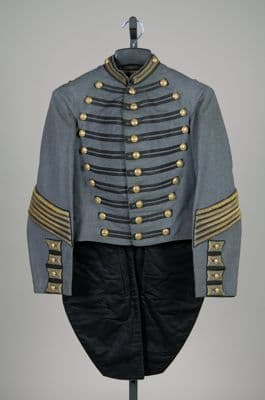
The gold braiding cascading down the Victorian jacket's chest and the pristine white cotton gloves represent two faces of military pageantry—one designed to dazzle, the other to disappear into protocol. Where the British dress uniform announces rank through its elaborate frogging and high collar, those simple American dress gloves speak to a different kind of discipline: the invisible labor of keeping everything spotless, pressed, and regulation-perfect.
Worn with·military capFunction·military-uniform
SHARED100 years · cross-category
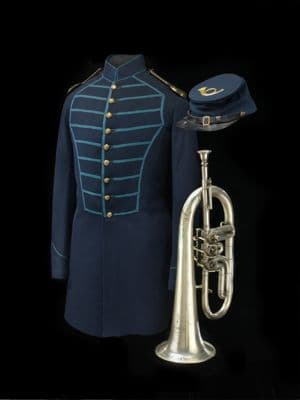
That pristine military dress coat, with its parade of brass buttons marching up the chest and gold braiding wrapped around the cuffs like expensive trim, demands the kind of ceremonial white gloves lying beside it — even though they're separated by decades. The coat's theatrical formality, all that frogging and metallic gleam, only works when every detail is militarily perfect, down to spotless gloves that won't leave fingerprints on the brass.
Worn with·military capFunction·military-uniform
SHARED130 years · cross-category
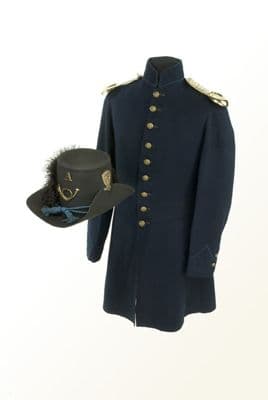
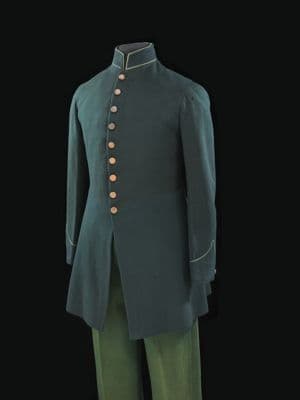
That forest green frock coat with its rigid stand collar and parade of brass buttons down the front carries the same authoritarian geometry as those crisp white dress gloves—both designed to transform the wearer into a symbol of institutional power rather than an individual.
Worn with·military capFunction·military-uniform
SHARED150 years · cross-category
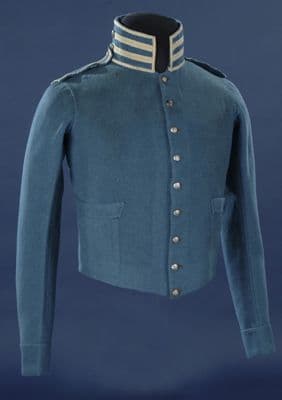
That blue-gray wool coat with its precise row of buttons and gold collar stripes carries the same DNA as those crisp white cotton gloves—both artifacts of military dress codes that transform civilian bodies into symbols of institutional power. The coat's tailored severity, with its stand-up collar and regimental detailing, demands the same meticulous attention to protocol as those gloves, which exist solely to present spotless, regulation hands during ceremonies and inspections.
Pull the Thread→
Follow this garment wherever the graph leads