SMITHSONIAN
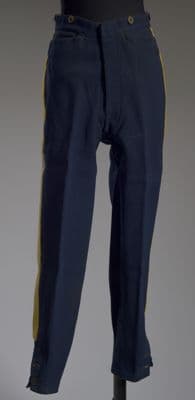
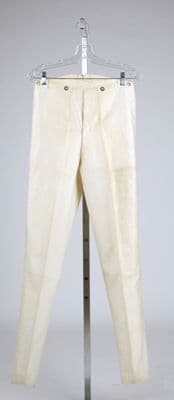
Navy Wool Gabardine Cavalry Officer's Riding Breeches
Fin de Siecle / Gibson Girl · 1900s · American
Production
handmade
Material
wool gabardine
Culture
American
Influences
European military riding breeches · British cavalry uniform tradition
High-waisted military riding breeches in dark navy wool with distinctive cavalry cut. The garment features a fitted waistband with button closure, full seat construction for mounted riding, and the characteristic flared thigh tapering to a close fit below the knee. The wool appears to be a sturdy gabardine weave suitable for military use. Two front pockets are visible with button closures. The silhouette reflects the practical requirements of mounted cavalry service while maintaining the formal military appearance expected of an officer's uniform during the early 1900s American military period.
pantspeg
Connected To
Worn with·military beltWorn with·military tunicFunction·military-uniform
SHAREDsame era · cross-culture
These two pairs of military trousers reveal how the same era's obsession with precision tailoring played out across different branches of service. The cream dress trousers, with their razor-sharp front creases and formal straight leg, speak to parade ground ceremony, while the navy cavalry breeches embrace pure function — that dramatic flare through the thigh and tight grip from knee to ankle designed for a life spent in the saddle.
Text73%
Entity51%
Worn with·riding bootsFunction·military-uniform
SHARED500 years · cross-culture · cross-category
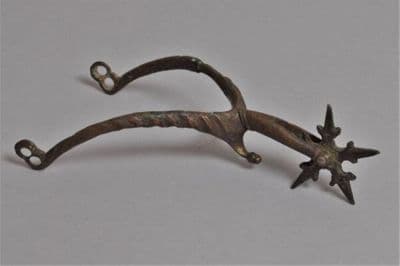
These pieces trace an unbroken line of military horsemanship across five centuries, from the medieval spur's star-shaped rowel designed to command a warhorse to the American cavalry officer's high-waisted breeches cut for life in the saddle. The spur's twisted copper shank and the trousers' reinforced seat both speak to the brutal practicalities of mounted warfare, where function dictated every curve and seam.
Worn with·riding boots
SHARED700 years · cross-culture · cross-category
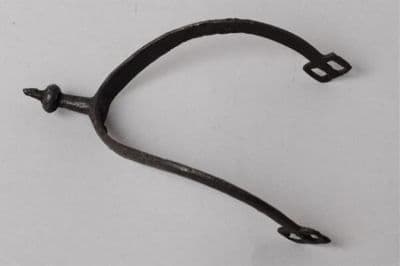
These pieces trace the evolution of equestrian authority across seven centuries, from the brutal poetry of medieval spurs to the tailored precision of military riding breeches. The iron spur's curved shank and rowel spoke in the violent language of battlefield control, while the high-waisted gabardine breeches—with their fitted thighs and flared hips—codified a more refined but equally commanding relationship between rider and mount.
Function·military-uniform
SHARED100 years · cross-culture · cross-category
Text70%
Image
Pull the Thread→
Follow this garment wherever the graph leads