V&A
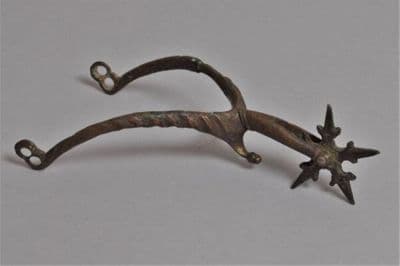
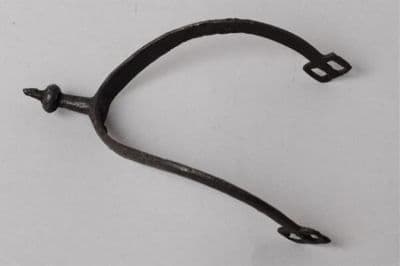
Medieval Copper Rowel Spur with Gilt Traces
Late Medieval · 1400s · European
Production
handmade
Material
copper
Culture
European
A medieval rowel spur crafted from copper with traces of former gilding, featuring curved heel bands that would wrap around a rider's boot. The spur displays a characteristic six-pointed star-shaped rowel wheel at the terminal end, designed to encourage horse movement through gentle pressure. The metal shows patination and wear consistent with age, with the curved arms exhibiting slight tapering toward attachment points. The construction demonstrates typical early 15th-century metalworking techniques, with hand-forged elements and functional design prioritizing durability for mounted combat and riding. The rowel's pointed projections are evenly spaced and moderately sized, indicating use for controlled communication with the horse rather than harsh punishment.
shoe
Connected To
Worn with·riding bootsFunction·military-uniform
SHARED500 years · cross-culture · cross-category
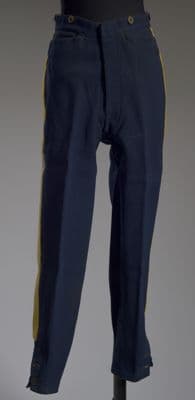
These pieces trace an unbroken line of military horsemanship across five centuries, from the medieval spur's star-shaped rowel designed to command a warhorse to the American cavalry officer's high-waisted breeches cut for life in the saddle. The spur's twisted copper shank and the trousers' reinforced seat both speak to the brutal practicalities of mounted warfare, where function dictated every curve and seam.
Text44%
Image62%
Entity31%
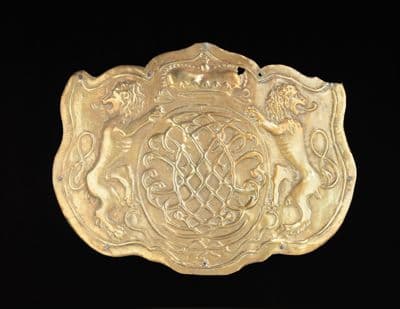
Worn with·riding bootsTechnique·metalwork
SHARED200 years
These spurs trace the evolution of medieval horsemanship from brute force to finesse. The earlier prick spur drives its single iron point straight into a horse's flank—all business, no ceremony—while the later rowel spur spins its star-shaped wheel with almost genteel precision, its copper body catching light where the iron predecessor absorbed it.
Technique·metalworkFunction·military-uniform
SHARED440 years · cross-culture · cross-category
Text43%
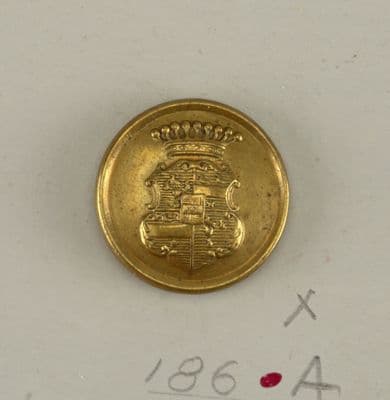
Technique·metalworkFunction·military-uniform
SHARED400 years · cross-culture · cross-category
Text42%
Pull the Thread→
Follow this garment wherever the graph leads