V&A
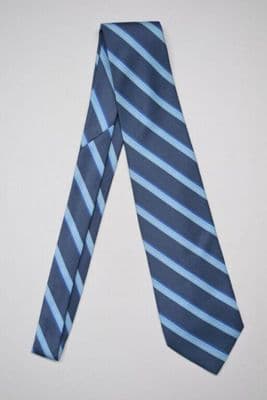
Navy Blue Diagonal Striped Silk Necktie
1980s · 1980s · Italian
Designer
Cerruti 1881
Production
ready-to-wear
Material
woven silk
Culture
Italian
Movement
Power Dressing
Influences
traditional regimental stripes · Italian luxury menswear
A classic necktie featuring diagonal stripes in graduated shades of blue, from navy to light blue. The stripes run at a traditional diagonal angle across the tie's width, creating a repeating pattern that alternates between darker and lighter blue tones. The silk appears to have a smooth, lustrous finish typical of quality menswear accessories. The tie maintains the standard proportions of early 1980s neckwear, with a moderate width that reflects the transitional period between the wider ties of the 1970s and the narrower styles that would emerge later in the decade. The construction shows precise pattern matching at the seams, indicating quality tailoring typical of Italian luxury menswear brands of this period.
tie
Connected To
Movement·Power DressingWorn with·dress shirtTechnique·machine-weavingMotif·
Pull the Thread→
Follow this garment wherever the graph leads