V&A
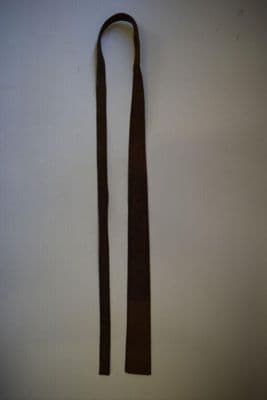
Brown Punched Suede Necktie
1970s · 1960s · British
Production
ready-to-wear
Material
punched suede
Culture
British
Movement
Mod · Hippie / Counterculture
Influences
mod slim silhouette · industrial perforation techniques
A narrow brown suede necktie featuring a distinctive punched hole pattern throughout its length. The tie displays the characteristic slim profile popular in 1960s menswear, measuring approximately 2-3 inches at its widest point. The suede material gives it a matte, textured surface that contrasts with traditional silk neckties of the era. The punched perforations create a geometric pattern of small circular holes, likely created through mechanical perforation. This construction technique reflects the Space Age fascination with industrial processes and unconventional materials in fashion. The straight-cut design lacks the traditional pointed tip, ending instead in a clean geometric edge that emphasizes the modern, minimalist aesthetic of mid-1960s British fashion.
tie
Connected To
Movement·Hippie / CountercultureMovement·Mod
SHAREDsame era · cross-culture · cross-category
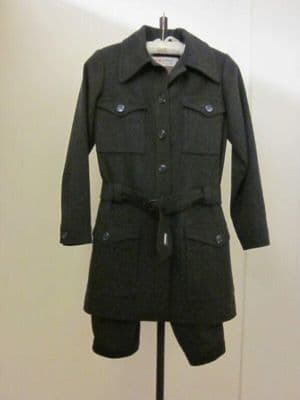
That skinny brown suede tie and the olive knickerbocker suit both carry the DNA of 1970s anti-establishment dressing, but they're playing entirely different games.
Text55%
Image66%
Entity27%
Worn with·dress shirtWorn with·suit jacket
SHARED30 years · cross-culture · cross-category
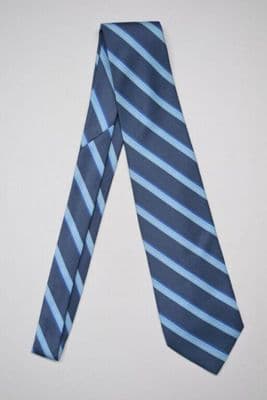
These ties reveal how texture became the new pattern in menswear's quiet rebellion against silk's monopoly. The 1970s British suede tie, with its deliberate perforations creating shadow-play across the surface, pioneered the idea that a necktie could whisper rather than shout—trading flashy prints for tactile intrigue.
Worn with·dress shirtWorn with·suit jacket
SHARED20 years · cross-culture
The brown suede tie's raw, punched-through construction feels like menswear's brief flirtation with craft-store rebellion, while the navy silk's crisp diagonal stripes march in perfect formation like a banker's heartbeat. What connects them across a decade isn't just the necktie format, but how each represents its era's idea of masculine rebellion: the '70s version rough-hewn and tactile, the '80s version polished but boldly geometric.
Movement·Hippie / CountercultureWorn with·dress shirt
SHARED10 years · cross-culture · cross-category
Text55%


Pull the Thread→
Follow this garment wherever the graph leads