V&A
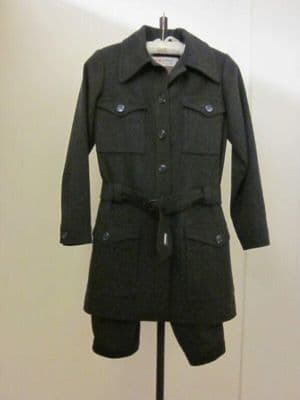
Olive Green Camel Hair Wool Knickerbocker Suit
1970s · 1960s · French
Designer
Yves Saint Laurent
Production
ready-to-wear
Material
camel hair wool
Culture
French
Movement
Mod · Hippie / Counterculture
Influences
menswear tailoring · 1960s androgynous fashion
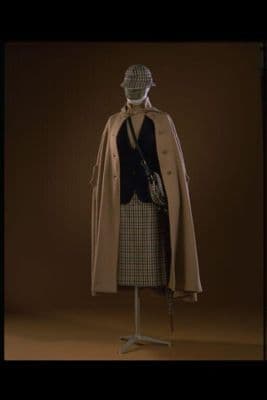
A structured three-piece knickerbocker suit in dark olive green camel hair wool, featuring a belted jacket with sharp lapels, chest pockets with flap closures, and button-front closure. The jacket extends to mid-thigh length with a self-belt at the waist creating definition. The matching knickerbockers are cropped at the knee with gathered hems, creating the characteristic bloused silhouette. The tailoring shows precise construction with clean lines and functional details typical of Saint Laurent's approach to menswear-inspired womenswear. The heavy wool fabric maintains structure while the coordinated three-piece format reflects the era's embrace of alternative silhouettes and androgynous styling.
jumpsuitstraightcollarlessknee length
Connected To
Influences·menswear tailoringMovement·Hippie / Counterculture
SHAREDsame era · cross-culture · cross-category
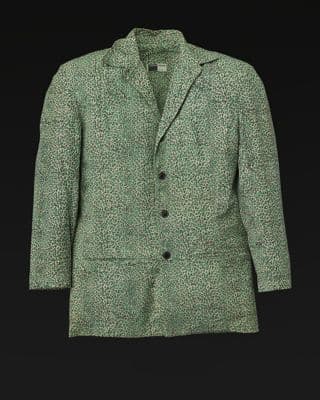
These two 1970s pieces reveal how the decade's menswear-borrowing impulse played out across different social strata and subcultural codes. The olive knickerbockers channel a kind of nostalgic dandyism—all those military-inspired chest pockets and belted waist suggesting someone cosplaying as a gentleman adventurer, while the sage blazer with its subtle animal print speaks to a more urban, nightlife sensibility where traditional suiting gets a predatory edge.

Pull the Thread→
Follow this garment wherever the graph leads