FASHIONPEDIA
White Synthetic Tent Shift Dress
2010s · 2020s · Western
Production
ready-to-wear
Material
synthetic blend
Culture
Western
Movement
Space Age · Mod · Gorpcore
Influences
1960s architectural modernism · Courreges geometric cuts
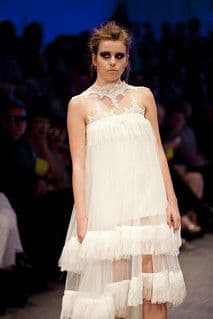
A stark white tent-style shift dress with a dramatically flared A-line silhouette that falls to knee length. The garment features a high geometric neckline with cutout details creating angular negative space at the chest and shoulders. Multiple tiers of fringe or textured trim create horizontal bands across the skirt portion, adding movement and visual weight to the hemline. The construction appears to use synthetic materials that hold the tent shape without clinging to the body. The model's styling with geometric sunglasses and slicked-back hair reinforces the futuristic aesthetic typical of Space Age fashion's emphasis on architectural forms and technological materials.
dresstenthigh neckknee length
Connected To
Movement·ModMovement·Space Age
SHARED60 years · cross-culture
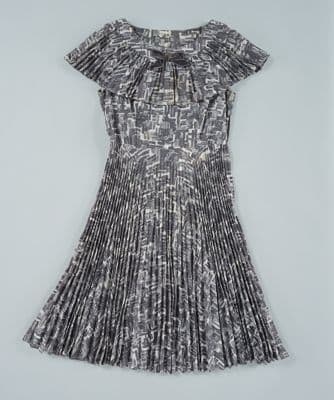
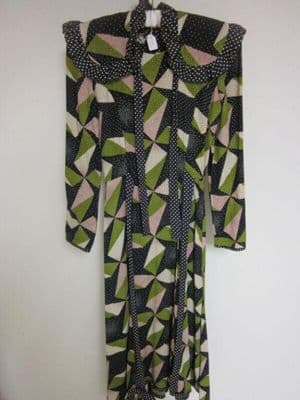
These two dresses speak the same modernist language across a sixty-year gulf, both committed to the radical idea that a woman's body is best served by clean geometry rather than curves. The 1960s shift with its bold leaf print and architectural A-line silhouette established the template—fashion as graphic statement, structure as liberation—that the contemporary white dress echoes in its tiered tulle construction and razor-sharp neckline cutouts.
Pull the Thread→
Follow this garment wherever the graph leads