V&A
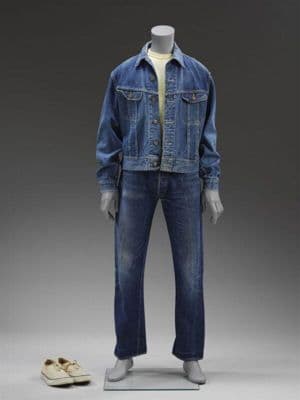
Blue Denim Jacket and Jeans Ensemble
1970s · 1970s · American
Designer
Lee and Levi Strauss
Production
mass-produced
Material
cotton denim
Culture
American
Movement
Counterculture · Hippie / Counterculture
Influences
American workwear tradition · Western ranch wear
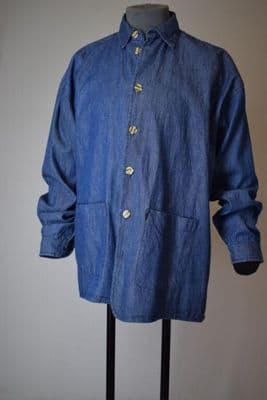
A classic American denim ensemble featuring a medium-wash blue jean jacket with chest pockets and button closure paired with straight-leg blue jeans. The jacket displays typical Western-style construction with contrast topstitching and metal hardware. Underneath is a bright yellow cotton t-shirt. The jeans appear to be straight-cut with a mid-rise waist, showing the characteristic indigo cotton denim weave with natural fading patterns. The ensemble is completed with cream-colored socks and represents the casual American workwear aesthetic that became mainstream fashion during the early 1970s counterculture movement.
jacketregular fithip length
Connected To
Influences·American workwear tradition
SHARED40 years
The cropped denim jacket from the '90s and the classic trucker from the '70s are separated by two decades and a revolution in fit—the earlier piece holds to workwear's boxy, utilitarian proportions while the later version shrinks those same Western yoke details and chest pockets into something that hits just below the ribs.
Echoes Across Time

1990s → 1970s · 40yr62%
SHARED
The cropped denim jacket from the '90s and the classic trucker from the '70s are separated by two decades and a revolution in fit—the earlier piece holds to workwear's boxy, utilitarian proportions while the later version shrinks those same Western yoke details and chest pockets into something that hits just below the ribs.
Influences·American workwear tradition
2010s → 1970s · 40yr62%
SHARED
Pull the Thread→
Follow this garment wherever the graph leads