FASHIONPEDIA
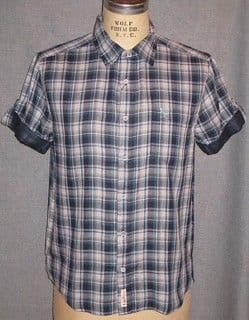
Navy Blue Check Cotton Button-Front Shirt
2010s · 2010s · American
Production
mass-produced
Material
cotton
Culture
American
Movement
Normcore
Influences
American workwear tradition · preppy casual shirting
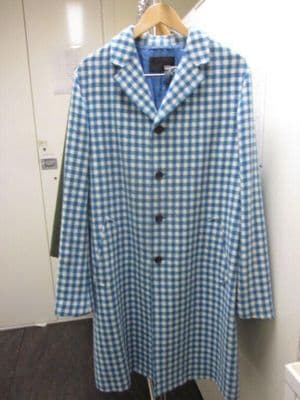
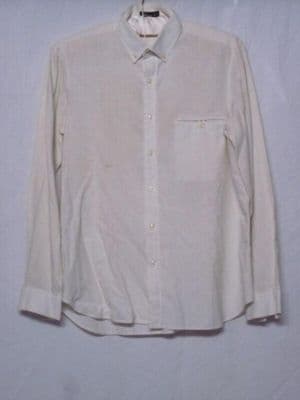
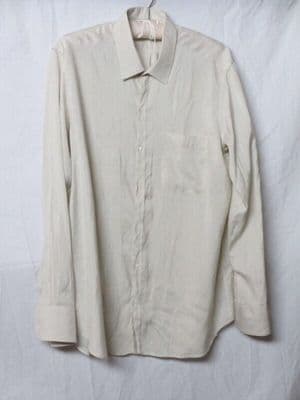
A short-sleeved button-front shirt in a medium-scale plaid pattern featuring navy blue, white, and light blue checks. The shirt displays a classic collar, front button placket, and appears to have a chest pocket. The sleeves are cuffed and the overall silhouette is straight and unstructured, typical of casual menswear styling. The plaid pattern shows even spacing and clean lines characteristic of machine-woven cotton shirting. The garment exemplifies the deliberately unremarkable aesthetic of normcore fashion, where ordinary, mass-market clothing became a conscious style choice rejecting fashion-forward trends in favor of generic, accessible pieces.
shirtregular fithip length
Connected To
Influences·American workwear traditionTechnique·machine-weaving
LINEAGE20 years→ directed
Lineage: “American workwear tradition”
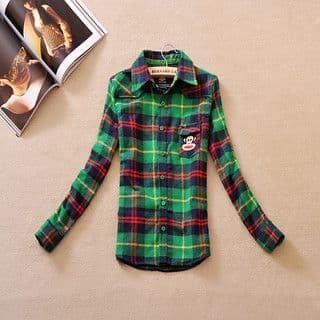
The flannel's bold forest green and navy tartan carries the full weight of 1990s grunge rebellion, where plaid became a uniform of studied carelessness, while the later shirt's muted navy check speaks in whispers—same grammar, different volume. Twenty years collapsed the plaid from statement to suggestion, the second shirt's delicate grid pattern trading the flannel's lumberjack bravado for something you could wear to a meeting without causing a stir.
Echoes Across Time
2010s → 1970s · 40yr62%
SHARED
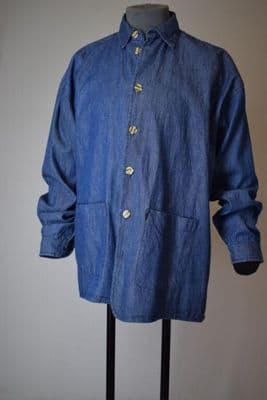
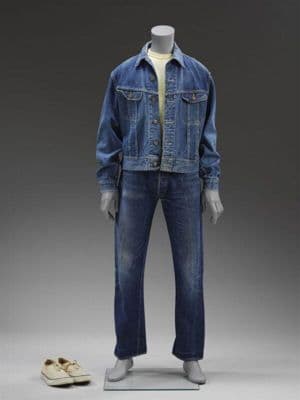
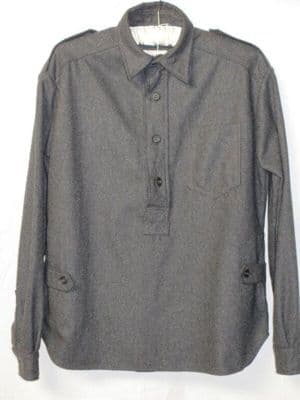
The plaid shirt's careful proportions and clean finish echo the denim jacket's structured silhouette, both descendants of American workwear that have traveled opposite trajectories over four decades. Where the 1970s denim speaks in the blunt language of labor—thick seams, utilitarian pockets, that slightly stiff drape of authentic work clothes—the contemporary plaid has been domesticated into weekend leisure, its checks scaled for suburbs rather than shop floors.
Influences·American workwear tradition
2010s → 1970s
Pull the Thread→
Follow this garment wherever the graph leads