1990s · 1990s · American
Production
ready-to-wear
Material
cotton flannel
Culture
American
Movement
Grunge
Influences
Scottish tartan patterns · American workwear tradition
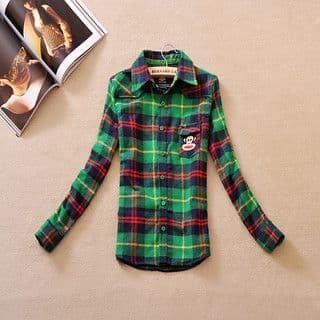
A fitted flannel shirt featuring a classic tartan plaid pattern in forest green, navy blue, red, and black. The garment displays traditional shirt construction with a pointed collar, button-front closure, and long sleeves with button cuffs. The flannel fabric appears to have a soft, brushed surface typical of cotton flannel weaves. The plaid pattern shows intersecting bands of color creating rectangular checks of varying sizes. The shirt's tailored fit through the torso reflects the grunge era's adoption of traditionally masculine workwear silhouettes, though adapted for a more fitted contemporary cut. A small embroidered or appliqué detail appears on the chest area.
Follow this garment wherever the graph leads
Lineage: “American workwear tradition”
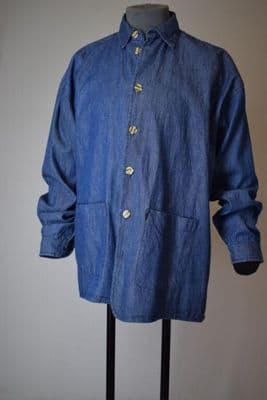
These two shirts trace the transatlantic journey of American workwear through grunge's cultural blender. The flannel's classic red-green tartan speaks pure Pacific Northwest—the kind of shirt that hung in every Seattle thrift store before Nirvana made it currency—while the denim work shirt translates that same utilitarian DNA through a British lens, swapping out the lumberjack's pattern for indigo and brass buttons that nod to both factory floors and country estates.
Lineage: “American workwear tradition”
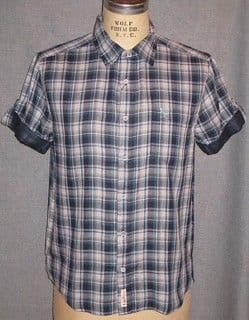
The flannel's bold forest green and navy tartan carries the full weight of 1990s grunge rebellion, where plaid became a uniform of studied carelessness, while the later shirt's muted navy check speaks in whispers—same grammar, different volume. Twenty years collapsed the plaid from statement to suggestion, the second shirt's delicate grid pattern trading the flannel's lumberjack bravado for something you could wear to a meeting without causing a stir.
Lineage: “American workwear tradition”
The forest green flannel carries the full weight of American workwear's mythology—thick cotton built for actual labor, with that oversized cut that says function over form. Two decades later, the blue check shirt has absorbed that same DNA but filtered it through a leaner, more self-conscious lens: the proportions are trimmed, the weave lighter, the whole thing designed for someone who wants to reference authenticity rather than live it.
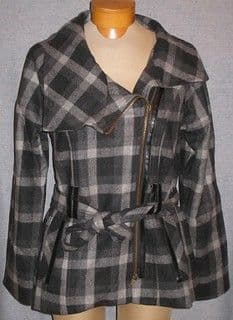
These two pieces trace plaid's journey from Highland ceremony to American casualwear, but what's striking is how both designers understood tartan's inherent drama. The 1980s blazer takes the formal route—that oversized silhouette and structured shoulders turn Scottish heritage into power dressing, while the belt transforms traditional plaid into something almost robe-like and ceremonial.