1990s · 1990s · British
Production
ready-to-wear
Material
cotton denim
Culture
British
Movement
Grunge
Influences
American workwear tradition · grunge casual styling
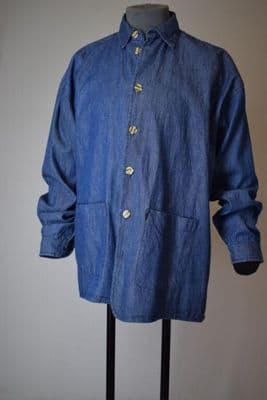
A classic indigo denim work shirt featuring a button-down collar and full-length button front closure with brass-toned metal buttons. The shirt displays the characteristic blue cotton denim weave with visible texture and weight typical of workwear construction. Cut with a generous, boxy silhouette that reflects 1990s casual fashion trends toward oversized fits. The collar is proportionally sized to the relaxed body, and the sleeves appear full through the arm with standard barrel cuffs. The shirt represents the crossover of traditional workwear into mainstream casual fashion during the grunge and alternative music influenced 1990s, when denim shirts became staples of everyday wardrobes rather than purely utilitarian garments.
Follow this garment wherever the graph leads

Lineage: “American workwear tradition”
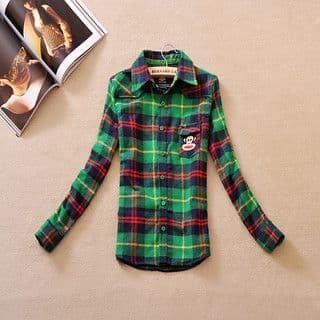
These two shirts trace the transatlantic journey of American workwear through grunge's cultural blender. The flannel's classic red-green tartan speaks pure Pacific Northwest—the kind of shirt that hung in every Seattle thrift store before Nirvana made it currency—while the denim work shirt translates that same utilitarian DNA through a British lens, swapping out the lumberjack's pattern for indigo and brass buttons that nod to both factory floors and country estates.
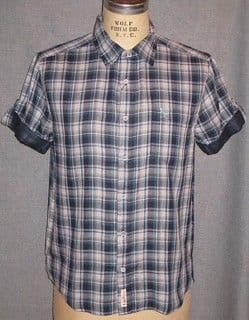
Both shirts trace their lineage to the American frontier, but they've traveled different paths to get here. The flannel's navy-burgundy plaid carries the DNA of 19th-century lumberjacks and railroad workers, softened into a fitted silhouette that hugs the torso with contemporary ease.
These two shirts trace the evolution of American workwear from utility to casualwear, separated by two decades and an ocean. The earlier denim work shirt, with its substantial cotton weave and utilitarian brass buttons, represents the original blueprint—built for durability with that characteristic boxy cut and reinforced construction that defined blue-collar uniforms.
These two shirts trace the same bloodline through American workwear, separated by two decades and an ocean but united by their devotion to honest utility. The 1990s British denim work shirt with its brass buttons and sturdy collar speaks the original language—pure function dressed up just enough for respectability—while the 2010s gingham check has been gentrified into something you'd wear to a film premiere, its pattern refined and its cut tailored for cameras rather than labor.