2010s · 2020s · American
Production
ready-to-wear
Material
cotton flannel
Culture
American
Movement
Normcore
Influences
American workwear tradition · 1990s grunge flannel
A fitted flannel shirt in a navy, burgundy, and white plaid pattern worn with dark skinny jeans. The shirt features a classic collar, button-front closure, and long sleeves rolled to three-quarter length. The garment is tailored close to the body with darts or side seams creating a feminine silhouette that follows the torso's natural lines. The cotton flannel appears to have a soft brushed surface typical of the fabric, while the plaid pattern consists of intersecting horizontal and vertical stripes in a traditional tartan-style arrangement. The styling represents contemporary casual American fashion where classic workwear elements like flannel are adapted into fitted, feminine silhouettes for everyday wear.
Follow this garment wherever the graph leads
Lineage: “workwear shirt construction”
These two flannels reveal how grunge's lumber-sexual uniform split into gendered streams in the 2010s normcore revival. The navy-burgundy plaid on the left gets the fitted, feminine treatment—tailored through the waist, sleeves pushed up just so, styled as a deliberate fashion choice rather than borrowed-from-boyfriend accident.
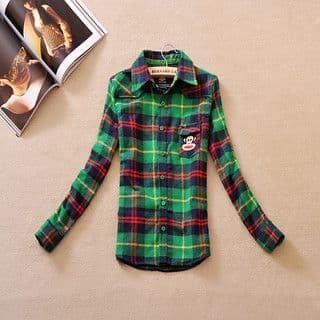
These two flannel shirts reveal how plaid has evolved from grunge signifier to Instagram prop. The '90s green shirt carries that decade's deliberate oversizing and saturated jewel tones—forest green bleeding into navy in thick, assertive stripes that demanded attention in a mosh pit. Fast-forward thirty years, and plaid has been domesticated: the newer burgundy-navy version fits like actual clothing, its muted palette and precise tailoring designed for selfies rather than subversion.
Both shirts trace their lineage to the American frontier, but they've traveled different paths to get here. The flannel's navy-burgundy plaid carries the DNA of 19th-century lumberjacks and railroad workers, softened into a fitted silhouette that hugs the torso with contemporary ease.
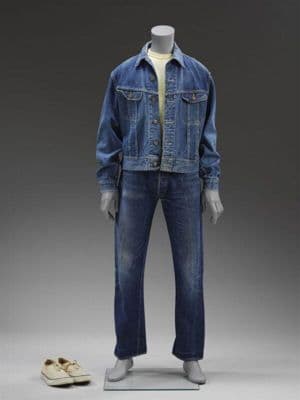
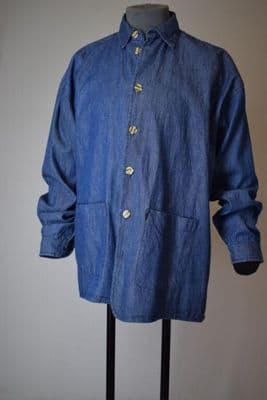
That plaid flannel and the denim ensemble are separated by decades but united by their roots in American workwear—both born from the practical needs of laborers who valued durability over decoration. The flannel's fitted silhouette and deliberate styling transforms what was once a lumberjack's uniform into something consciously casual, while the denim set maintains the boxy, utilitarian cut of its 1970s moment when workwear first crossed into everyday fashion.