V&A
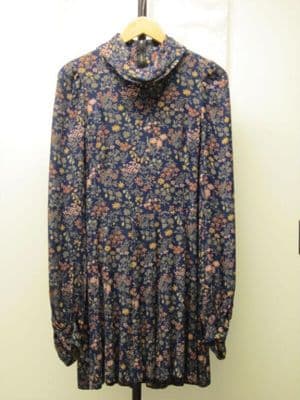
Navy Cotton Twill Mini Dress with Floral Print
1970s · 1960s · British
Designer
Biba
Production
ready-to-wear
Material
cotton twill
Culture
British
Movement
Mod · Swinging London · Hippie / Counterculture
Influences
1960s mod shift dress · bohemian folk patterns
A mini-dress in navy cotton twill featuring an all-over small-scale floral print in rust, cream, and golden tones. The garment has a distinctive cowl or draped neckline that creates soft folds at the throat. The silhouette is a classic 1960s A-line shift that skims the body without fitted waistline, ending well above the knee. Long sleeves are set-in and appear slightly full through the forearm. The cotton twill has a substantial weight that allows the dress to hold its shape while draping softly. The dense floral pattern consists of tiny blooms and leaves scattered across the dark ground, typical of Biba's romantic bohemian aesthetic that bridged mod and hippie sensibilities in late 1960s London fashion.
dresstentturtle neckmini
Connected To
Influences·1960s mod shift dress
SHARED60 years · cross-culture
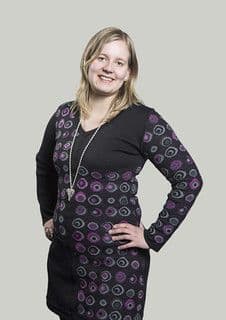
The clean geometry of that teal shift dress with its precise circles carries the same modernist DNA as the 1970s floral mini, both descendants of the revolutionary 1960s shift that liberated women from fitted waistlines. Where the contemporary piece abstracts pattern into perfect dots against solid color, the vintage dress scatters tiny florals across navy like confetti, but both rely on that essential A-line silhouette that skims rather than clings.
Echoes Across Time

2010s → 1970s · 60yr61%
SHARED
The clean geometry of that teal shift dress with its precise circles carries the same modernist DNA as the 1970s floral mini, both descendants of the revolutionary 1960s shift that liberated women from fitted waistlines. Where the contemporary piece abstracts pattern into perfect dots against solid color, the vintage dress scatters tiny florals across navy like confetti, but both rely on that essential A-line silhouette that skims rather than clings.
Influences·1960s mod shift dress
2020s → 1970s
Pull the Thread→
Follow this garment wherever the graph leads